Animals move in incredible ways! Some slither, some leap, some glide through the air, and some even roll like wheels. These unique movements help animals find food, escape predators, and survive in their environments. In this Mini Spark, you will explore several animals with unusual ways of moving and discover how their special adaptations help them travel.
Spark Your Learning!
1. Set up your Mini Spark recording page: Science Mini Spark #42 Amazing Animal Movers. What is the most unusual way you have ever seen an animal move?
2. Watch this video about how snakes move. Record the 4 ways of movement and 2 detilas about each one.
3. Record these these 5 animals names and their unusual movements:
- Mantis Shrimp – Rolling
- Paradise Tree Snake – Aerial Gliding
- Sea Pig – Hydraulic Walking
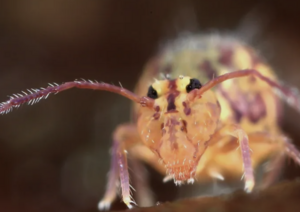
- Springtail – Bouncing and Leaping
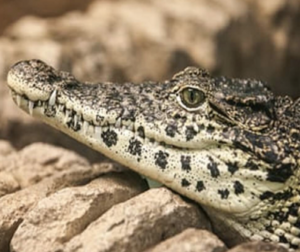
- Cuban Crocodile – Ground Galloping
4. Read about each animal and write record how the animals’ unique locomotion helps protect the animal.
Rolling — Mantis Shrimp The animal: Some small mantis shrimp living in sandy coastal areas. How it moves: When threatened and far from its burrow, the mantis shrimp flips onto its back and uses strong tail and body motions to somersault along the sand. This rolling motion acts like a wheel and lets the shrimp travel faster across loose sand than by normal crawling. Rolling reduces the time it stays exposed to predators.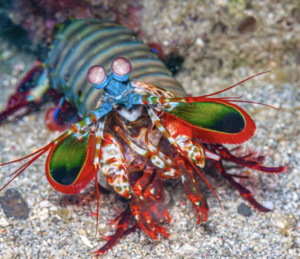
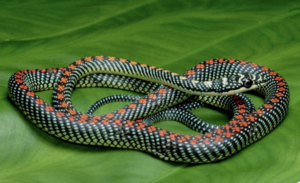
Aerial Gliding — Paradise Tree Snake The animal: The paradise tree snake, found in trees across Southeast Asia. How it moves: This snake launches itself from high branches, flattens its body, and forms an S-shaped curve. By changing its body shape it produces lift and can glide through the air for long distances (sometimes 20 meters or more). It steers by bending and twisting its body to land safely on another tree or avoid obstacles.
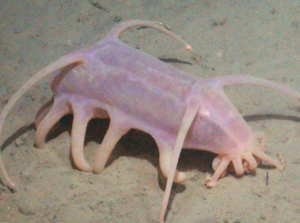
Hydraulic Walking — Sea Pig The animal: Sea pigs, a type of deep-sea sea cucumber that lives on the ocean floor. How it moves: Sea pigs walk using long, tube-like feet. Instead of contracting muscles in the feet, they change water pressure inside their body to inflate and deflate the tube feet. This hydraulic system lets them lift and move each foot to “walk” slowly across the muddy seafloor while they search for food.
Bouncing and Leaping — Springtail The animal: Springtails, tiny hexapods that live in soil, leaf litter, and moss. How it moves: Springtails have a folded forked appendage called a furcula under their abdomen. When triggered, the furcula snaps downward like a spring, launching the animal high into the air in a quick jump. This catapult-like action helps springtails escape predators and move between small habitat patches.
Ground Galloping — Cuban Crocodile The animal: The Cuban crocodile, which is more terrestrial than many other crocodile species. How it moves: With relatively long, strong limbs and a muscular body, the Cuban crocodile can run on land in short bursts. It uses leaping and bounding motions that look like galloping to move faster across beaches and dry ground. This agility helps it chase prey and move between water and land.
5. Answer this question on your recording page. Which animal movement would be the most useful for a human to have? Explain your answer using evidence from your research.
6. Submit your completed Mini Spark notebook pages to your teacher or EY Coordinator.
Look for the the snake mini spark and snaket badge and the EY website.