Category Archives: Social Studies Enrichment

#21: The Floating City of Rotterdam

Spark your thinking!

1. Set up your social studies mini spark recording page: #21: The Floating City of Rotterdam

2.  Watch this introduction video. Record each of the places shown on your recording sheet.


3. Read this article and answer 4 of the the questions with 3+ sentences. Remind your teacher that the answer key can be found in the social studies mini spark folder.

  • What historical event led to the creation of the Delta Programme in the Netherlands? Explain the significance of this program in flood management.
  • How does Rotterdam’s innovative architecture contribute to its ability to manage rainwater? Provide specific examples from the text.
  • Explain how the Floating Farm operates. What technologies are used to support food production on the farm?
  • What unique features do Wikkelboats offer to guests, and how do they reflect eco-friendly living?
  • How does the design of the Floating Office Rotterdam (FOR) incorporate sustainability? List at least two design elements mentioned in the text.
  • In what ways do the innovative projects in Rotterdam reflect the city’s response to climate change and flooding challenges?
  • Based on the text, how do these unique architectural projects enhance the experience of residents and visitors in Rotterdam?

4. Go to this link to read an article about the floating park. Write 5-10 details about the park on your recording sheet. Include information about how this park is helping to save the environment.

5. Learn more about floating farms. Record 3-5 reasons you like this idea, 3-5 questions you have, and 3-5 things you don’t like about floating farms.

6. Share your social studies mini spark recording page with your teacher/EY coordinator.


#20-Babe Ruth

Babe Ruth (1895–1948) is considered one of the greatest baseball players in history. He changed the game by popularizing the mighty home run swing rather than just relying on small, tactical plays. Known as “The Sultan of Swat” and “The Great Bambino,” he hit 714 home runs during his career.

Spark your thinking!

1.  Set up your Social Studies Mini Spark Page: #20: Babe Ruth

2. Read about Babe Ruth at Britannica. Make a mini timeline on your recording page. Include 5 +  dates with details about those dates.

3. Listen to the the Babe and I, a picture book about a family’s experiences during the the great depression. Answer the questions below.


Choose 2 of these questions to answer in 2+ sentences.

What was the economic climate like in America during 1932, and how did it affect the main character’s family?

What unique business arrangement does the boy make with Mrs. Johnson, and why is it mutually beneficial?

How do the boys figure out which newspaper headlines sell the best, and what does this say about human nature?

How does Babe Ruth change the boys’ lives? What did the $5 bill represent to them beyond just money?

3.  David Adler,  the author of The Babe and I,  has written picture books about many famous humans. Look over the different books on this list. Record the names of 3 books that you would be interested in reading.

4. Share your social studies mini spark recording page with your teacher/EY coordinator.

Check out these Social Studies mini sparks about other events during the Great Depression


# 19: Learn about Nebraska

Nebraska is the 16th largest state by land area, covering just over 77,220 square miles. The state flower is the goldenrod and the state bird is the meadowlark.  This Social Studies Enrichment post has you digging into Nebraska information and history.

1. Set up your social studies mini spark recording page: # 19: Learn about Nebraska

2. Visit these sites and find 10-15 pieces of information on your recording page about Nebraska. Try to look for details to record you did not already know.

https://www.50states.com/facts/nebraska.htm

https://www.factmonster.com/us/states/nebraska

3. Visit National Geographic Kids and read about Nebraska.  Record at least one idea from each of the sections on this website. Look for information that you did not already know as you are writing information.

  • HISTORY
  • WHY’S IT CALLED THAT?
  • GEOGRAPHY AND LANDFORM
  • WILDLIFE
  • NATURAL RESOURCES
  • FUN STUFF

4. Create an interview between you and the state of Nebraska. Remind your teacher that the answers can be found in the social studies mini spark page.

Sample script

Reporter– Hello, Nebraska Thank you for agreeing to meet with me. What does the name “Nebraska” mean, and which river is it associated with?

Nebraska-Of course, thank you for the opportunity. The name “Nebraska” comes from Native American words meaning “flat water,” referring to the Platte River

You can use these question prompts or choose your own.  Include at least 3 questions and answers.

  1. What evidence do archaeologists have that people have lived in Nebraska for at least 13,500 years?
  2. List three Native American tribes mentioned in the text that developed in Nebraska.
  3. What significant purchase did France make in 1803, and how did it affect Nebraska?
  4. Describe the route taken by some of the first settlers arriving in Nebraska. What challenges did they face?
  5. What does the name “Nebraska” mean, and which river is it associated with?
  6. Identify the two major regions of Nebraska mentioned in the text and describe one characteristic of each.
  7. How did the melting glaciers contribute to the geography of the Dissected Till Plains?
  8. What types of wildlife are mentioned as common in Nebraska, and which species is noted for being rare?
  9. How does the High Plains Aquifer contribute to Nebraska’s agriculture?
  10. What is Carhenge, and how does it compare to England’s Stonehenge?

5. Share your social studies mini spark recording page with your teacher/EY coordinator


#18: Ireland

This mini spark is all about the Emerald Isle! Ready to discover one of Europe’s most beautiful countries?
Spark your thinking!

1. Set up your Social Studies recording page: #18: Ireland Information

2.  Set your timer for 3 minutes. Study this map of Ireland. Record 10 details on your recording page.

3. Read a teaching page all about Ireland at National Geographic Kids.   Record at least 8 facts that you did not know.

4. Do research to determine if these are Irish cities, counties, rivers, or mountains. Record your answers on your recording page. (Don’t peek until you have done the research)

  • Liffey
  • Galway
  • Shannon:
  • Belfast
  • Cork
  • Slieve
  • Bray
  • Erne
  • Wicklow
  • Killarney

When you are done, scroll to the bottom of this post to check your work.

5.  Share your Social Studies mini spark recording page with your teacher/EY coordinator.


  1. Liffey: The River Liffey is a major river in Dublin, Ireland, that flows through the city and is an important part of its geography and history.
  2. Galway: A city on the west coast of Ireland known for its vibrant culture, arts scene, and as a gateway to scenic areas like Connemara and the Cliffs of Moher.
  3. Shannon: The River Shannon is the longest river in Ireland, flowing through several counties and known for its beautiful landscapes and recreational activities.
  4. Belfast: The capital city of Northern Ireland, known for its rich industrial history, cultural landmarks, and as the birthplace of the RMS Titanic.
  5. Cork: A city located in the south of Ireland, famous for its historic architecture and as a center for food and music.
  6. Slieve: Refers to the Slieve Mish Mountains, a mountain range in County Kerry, known for its rugged beauty and hiking trails.
  7. Bray: A coastal town near Dublin, known for its scenic seafront and the nearby Bray Head mountain, popular for walking and stunning views.
  8. Erne: The River Erne is a river in the northwest of Ireland that flows through counties Fermanagh and Donegal, known for its lakes and fishing.
  9. Wicklow: A county in Ireland known for the Wicklow Mountains, which offer beautiful landscapes, hiking opportunities, and rich biodiversity.
  10. Killarney: A town in County Kerry, famous for its national park, lakes, and mountains, making it a popular destination for tourists and nature lovers.

#17: Jesse Owens

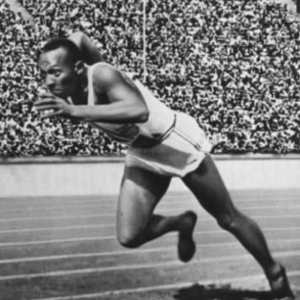
Jesse Owens, son of a sharecropper and grandson of a slave, achieved what no Olympian before him had accomplished.

Spark your thinking!

1. Set up your social studies mini spark recording page #17: Jesse Owens

2. Read this information and make a timeline with at least 8 dates.

Who was Jesse Owens?  Track-and-field athlete Jesse Owens won four gold medals at

the 1936 Olympic Games. His achievements were important for himself and for many other people at the time. The Games were held in Berlin, Germany. Nazi leader Adolf Hitler was in power there. Nazi banners draped the sports field. The Nazis believed white athletes were best. But Owens proved that they were wrong.

James Cleveland Owens was born in Oakville, Alabama, on September 12, 1913. His family later moved to Cleveland, Ohio, in search of better opportunities.

Jesse became a track star at a young age. In 1928 he set track records in the high jump and the running broad jump (long jump). In 1933, while he was in high school, he broke three other records. He then went to Ohio State University.

In the 1936 Olympics Owens won gold medals for the running broad jump, the 100- and 200-meter races, and the 4 × 100-meter team relay. He also set new Olympic and world records.

Owens graduated from college in 1937 and worked for the Illinois Athletic Commission. He later got involved in guidance activities for young boys. He also made goodwill visits to countries in Asia for the U.S. government. Owens died in Phoenix, Arizona, on March 31, 1980.

3. To learn more about Jesse Owens, watch the video below.  Record 1 idea you would like to remember, 2 words to describe Jessie, and 3 facts.

4. This information page has more detailed information about Jessee. What is the most important thing you learned about Jesse Owens? Respond with several thoughtful sentences. Add this to your recording sheet.

5. Share your Social Studies mini spark recording page with your teacher/EY coordinator.


#16: New Year’s Eve

Happy New Year!!!!!!  You might be wondering, “Where did the tradition of celebrating the new year come from?”  Or, “Why do we celebrate the new year on January 1st?” In this mini spark you will learn about the history of New Year’s Eve and some of the traditions celebrated.

Spark you thinking!

1. Set up your social studies mini spark recording page: #16: New Year’s Eve

2. Watch this introduction video. Record 5-10 details from the video.

3. One of the traditions on New Year’s Eve is the New York Times Square ball drop. Read about this tradition at in an article from Wonderopolis. Record 3 details from the article, 2 words that were new to you or unique, and 1 question you have.

4. Read the article about New Year’s Eve traditions from around the world.  For each location, record 3-5 details.

  • Spain
  • Greece
  • Brazil
  • Japan
  • United States
  • Denmark

5.  Which New Year’s tradition do you find most interesting, and why? Provide evidence from the text to support your opinion.

6. Share your social studies mini spark recording page with your teacher/EY coordinator.


#15: Juliette Gordon Low

Inventor, Juliette Gordon Low, or as her friends called her, “Daisy,” was like the superhero of Girl Scouts, zooming around with courage, confidence, and character! In 1912, she waved her magic wand and created Girl Scouts of the USA, where girls could gather to unleash their amazing powers in STEAM—science, technology, engineering, arts, and math! Just like a science experiment gone right, she turned her dream of girls teaming up to celebrate their strengths into a fantastic reality!

Spark your thinking!

1. Set up your Social Studies mini spark recording page: #15: Juliette Gordon Low

2. Watch this video to learn about Ms. Low. Take notes on your recording sheet.

3. Read and examine all of the pages on these sheets which share Ms. Low’s patent for a liquid container made out of paper.  How do the different labels and figures help understand the drawings.

4. Print page 2 of this information sheet. Work on the folding project. Reminder: You will need to study the patent drawing page to find the steps.

5. Now add your own creativity! Think of 3 new uses for this invention.

6. Take a picture of your product and your three ideas and add it to your recording page

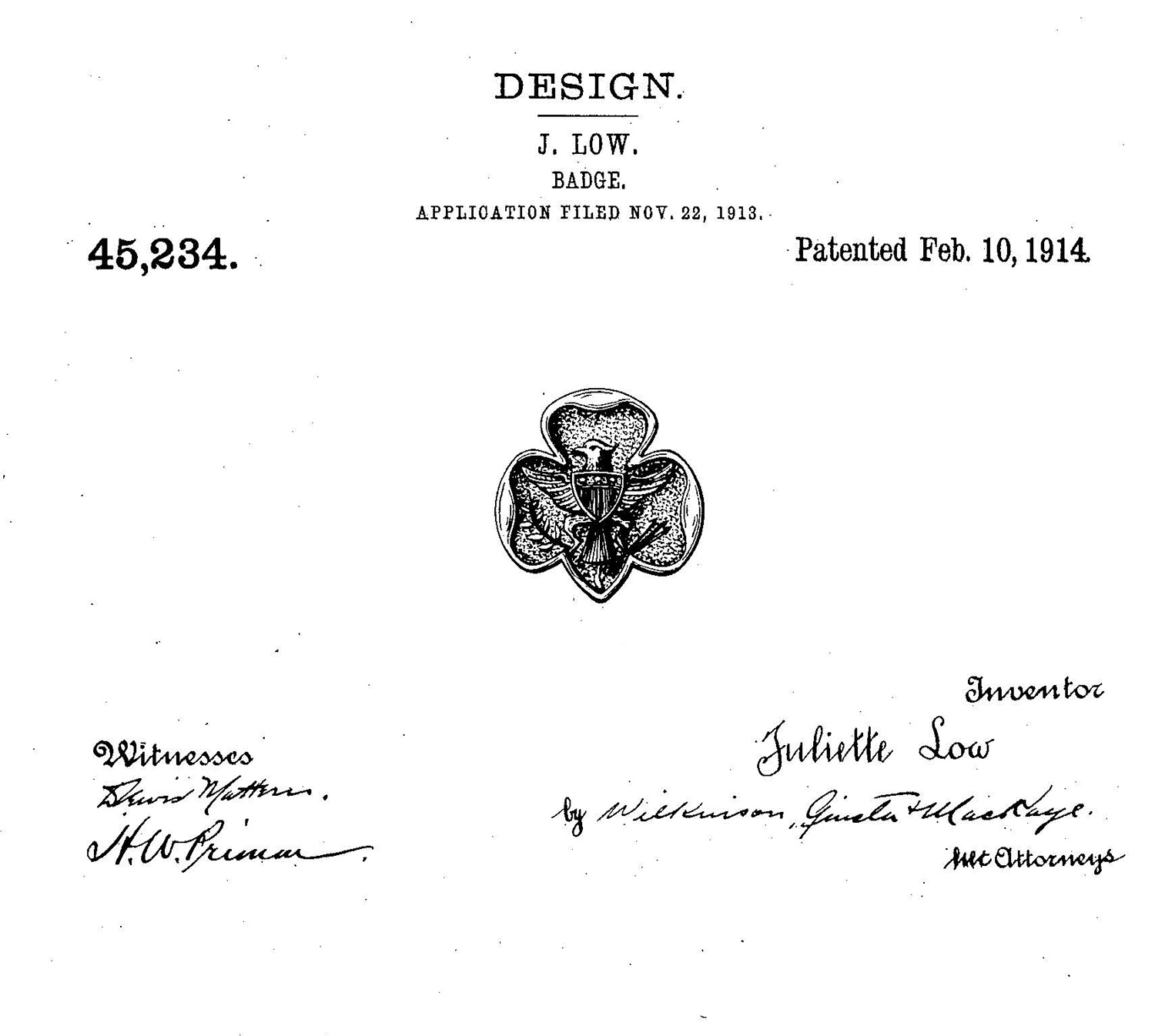
7. Did you know that Juliette Low also has a Design Patent? It may look familiar to you. It is the inspiration for many trademarks utilized by Girl Scouts of America. Study this image. Do some research to find out what a design patent is. Record your findings on your recording page.

8. Share your STEAM mini spark recording page with your teacher/EY coordinator.

Check out the Kids Invent Stuff Badge the Problem Solving Invention Badge at the EY website.

#14: Alpha, Bravo, Charlie


Say what?

A student recently asked me if I knew the NATO alphabet.  I hadn’t heard of it so I told him to send me an email about it and voila…We have our #66 math mini spark!

Spark your math thinking!

  1. Set up your social studies mini spark recording page: #14: Alpha Bravo Charlie
  2. Read about the NATO phonetic alphabet by visiting this site.  Record what you have learned.
  3. Learn about how the alphabet was chosen write about some new information that you learned.
  4. Watch this video and then record the spelling of your first name using the correct NATO alphabet words.

5. Check out how the U.S. Navy uses alphabet flags, numeral pennants, numeral flags, and special flags and pennants for visual signaling.  Even though the flags are not used for spelling out words, draw the flags that would spell your first name.

6. Share your math mini spark recording page with your teacher/EY coordinator.

CM (Charlie Mike): Means continue mission.  Keep moving forward.  

#13: Geography Lesson-State Capitals

It is always a good time to learn more about Geography. Study this geography lesson which is all about state capitals.

Spark your thinking!

1. Set up your social studies spark recording page: #13: Geography Lesson-State Capitals

2.  Watch this video all of the way through.  Go back to the video to find 5 capital/state combos that you don’t have memorized yet. Record the state name, capital, and the image that was drawn in the video.

3. Print or open this list of states and capitals. Choose 10 that you do not have memorized. Type or write all 10 sets on your recording page.

4. Take the 10 states that you picked and make flash cards using note cards. Set your timer and practice for 3 minutes. On your recording sheet, write how many you know after 3 minutes. For example: After 3 minutes I have 5 out of the 10 state/capital combos memorized.  5/10

5. Take this capital quiz one time. Record your score.

6. Find the list of states and capitals from step 3. Set your timer for 3 minutes and read over the list.  Take this capital quiz again. Record your score.

7. OPTIONAL: Check out this webpage made by a teacher who found the best way to memorize the states’ capitals. Look it over and see what you think.  If you want to try this challenge yourself, take to your teacher about printing a 11X 17 map of the USA so you can make all of the drawings. If want to do this project, you can earn the  state savy badge-state capitals edition.

8. Share your social studies mini spark recording page and visual with your teacher/EY coordinator.

Check out the state savvy badge at the EY website.

#12: The Mystery of the Glowing Soldiers

 After the Battle of Shiloh during the Civil War, some wounded soldiers were said to have wounds that glowed with a faint blue light. Years later, scientists discovered that a glowing bacterium may have helped protect these soldiers from infection. In this Mini Spark, you will explore this fascinating connection between history and science. The “Angel’s Glow” story is a well-known Civil War legend, though historians have found little contemporary evidence that it actually occurred. The science behind the glowing bacteria is real and remarkable.

Spark Your Learning!

  1. Set up your Social Studies Mini Spark recording page: #12: The Mystery of the Glowing Soldiers.

  2. Watch this video. Record 3 details on your recording page.

3. Read the article about “Angel’s Glow.”

On your recording page, write:

    • Three facts you learned.
    • Two questions you still have.

4. Choose one question to answer:

      • How did science help explain the legend of Angel’s Glow?
      • Why is it important to investigate stories from history using evidence?
      • What surprised you most about this story?

5. Submit your completed Mini Spark page to your teacher or EY Coordinator.

Learn more about the Civil War in Social Studies Mini Spark #71

Check out the Civil War Inventions badge that the EY website.