Category Archives: Social Studies Enrichment

#11: The Ancient Origins of the Olympics

Thousands of years in the making, the Olympics began as part of a religious festival honoring the Greek god Zeus in the rural Greek town of Olympia. But how did it become the greatest show of sporting excellence on earth? Armand D’Angour explains the evolution of the Olympics.

1.  Set up your Social Studies Mini Spark recording page:  #11: The Ancient Origins of the Olympics

2. View the video about the origins of the Olympics. Record 5 details from the video.


3. Learn more about Ancient Olympic Games and the mythology behind them? Click here to find out more! Write a sentence about each of the gods mentioned.

4. Do chariot racing, the pankration, and twenty competitors on one running track at once sound challenging? Visit this site to find out more about the competitions. Record the names of the events on your recording page.

5. Ever wonder about the meaning behind the Olympic Symbols? What is the meaning of the five rings, the flame, and the motto “Citius, Altius, Fortius.” Read this and find out their meanings. Record 3 facts about the Olympic rings on your recording page.

6. Share your Social Studies mini spark recording sheet with your teacher or EY coordinator.

Check out these Mini Sparks to learn more

Math Mini Spark #71

STEAM Mini Spark #35

#11: The Ancient Origins of the Olympics


Thousands of years in the making, the Olympics began as part of a religious festival honoring the Greek god Zeus in the rural Greek town of Olympia. But how did it become the greatest show of sporting excellence on earth? Armand D’Angour explains the evolution of the Olympics.

Below, please view the video about the origins of the Olympics:

More resources for you to explore:

Interested in the Ancient Olympic Games and the mythology behind them? Click here to find out more! Do chariot racing, the pankration, and twenty competitors on one running track at once sound challenging? Visit this site to find out more about the competitions, spirit of the ancient Olympics, and stories of the competitors.

For all things Olympic go to Olympic.org, and take a look at the featured athletes, youth development and future Olympic cities. Which city will host the next Olympic games in 2024? Read about how the next Olympic city will be chosen and the process that goes along with it here. After all the festivities and competitions are done, see “What Becomes of Olympic Stadiums.” Interested in following Olympic news on social media? Visit Twitter!

Ever wonder about the meaning behind the Olympic Symbols? What is the meaning of the five rings, the flame, and the motto “Citius, Altius, Fortius.” Read this and find out their meanings. Interested in Olympic Medals? Are they really made of Gold, Silver and Bronze? Learn the truth here!

Finally, think about the following question and respond in the comments section below with your thoughts:

Do the Olympics encourage sporting activity at all levels or just for elite sportspeople?

#10: Horse-Riding Librarians

How can you deliver library books to remote parts of the country? In the 1930s, during the Great Depression, jobless Americans in isolated regions of Kentucky relied on horse-riding librarians. Learn more in the Social Studies Mini Spark.

Spark your thinking!

1. Set up your Social Studies mini spark recording page: #10: Horse Riding Librarians

2. A part of President Franklin D. Roosevelt‘s New Deal, the Pack Horse Library Project was “an ambitious plan to deliver educational resources to struggling eastern Kentucky families.” Championed by First Lady Eleanor Roosevelt, the Works Progress Administration (WPA) program also benefited women and children by providing women with a way to earn income.

3.  In this video of Untold History, learn more about the Horse Riding Librarians. Record 5 details about this program on your recording page.

4. Listen to this/read this 6 minute podcast, The Pack Horse Librarians Of Eastern Kentucky, from PBS.

How did people respond to the program?

Where did the books come from?

In the podcast they compared the Kentucky book project to other types of programs around the world. Record a few of these programs.

5. Share your Social Studies mini spark recording page with your teacher or the EY coordinator in your building.


#9: The First Filming of an Inauguration

Have you ever wondered when the media first became involved in the Presidential Election process? The first Presidential Inauguration ever filmed was filmed on March 5th, 1933. It was the Inauguration of President Franklin Delano Roosevelt.


Spark your thinking!

1.  Set up your Social Studies mini spark #9: The First Filming of an Inauguration.

2. Click on the link below to watch this first inauguration ever on film:

3. Set your timer for 3 minutes and read part of the this Primary Source: FDR’s First Inaugural Address, 1933.  In this speech, FDR famously said, “The only thing we have to fear is fear itself.” What do you think he meant by this? How can being too scared stop people from solving big problems?

4. The United States Congress traditionally holds an inauguration luncheon in Statuary Hall to honor the president. The food served is often a reflection of the interests or roots of the incoming president. In 1961, Massachusetts-born John F. Kennedy dined on New England boiled stuffed lobster with drawn butter and deviled crabmeat imperial; spending his adult life in California, Ronald Reagan’s menu in 1981 included a California garden salad. If you were elected president of the United States what would be served at your inaugural luncheon reflecting your interests and/or roots?

5. Share your Social Studies mini spark page with your teacher or the EY coordinator in your building.

Learn more about this time period in history with this other Social Study mini sparks.


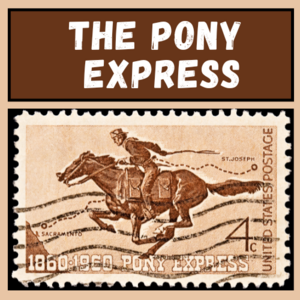
#8: The Pony Express

What was the importance of the Pony Express to the settlement and expansion of the American West? Find out in this mini spark.

Spark your thinking!

1. Set up your Social Studies mini spark recording page: #8: The Pony Express

2. Read this article. Record 5 details about the Pony Express.

3. Watch this video. Record 5 details from the video.

4. Share two interesting facts about the Pony Express.

Describe three things about the riders.

Give four reasons why you would want to be a Pony Express rider or four reasons why you would not want to be a Pony Express rider.

5. Share your early enrichment mini spark recording page with your teacher or the EY coordinator in your building.

Check out the Pony Express badge at the EY website.

#7: Zip Codes and More!

ZIP Codes™ are an integral part of making sure the mailpiece is processed quickly and efficiently. Not having a ZIP Code™ on your mail causes unnecessary delays because it will require manual handling.

Spark your thinking!

1. Set up your Social Studies mini spark recording page: #7: Zip Codes and More!

2. Watch this video about how mail is sorted.  What is culling? Describe the bar codes and explain why they are added to the envelopes.

3. Watch this video. Record 5 ideas from the video on your recording page.


4. Zip codes are helpful, but what are some other ways mentioned in the video that we can use to find locations

5.  A full ZIP code has five digits, like 12345. But the first three digits are super important because they tell you which main post office, called a Sectional Center Facility. Look over this list of the first 3 Zip code numbers from all over the US. Find 5 cities you have not heard of before and record the state, city name, and the SCF.

6.  Share your Social Studies mini spark recording page with your teacher or the EY coordinator in your building.


Enjoy this spark? Look for these badges at the EY website

#6: Lizard Point Geography Quizzes


How well do you know the location of the stated in the United States of America? In this mini spark you will learn how to use lizard point quizzes to become a geography master!


Spark Your Thinking!

1. Set up your Social Studies mini spark recording page: #6: Lizard Point Geography Quizzes

2. Watch this introduction video. Record 5 of the different ways you can use Lizard Point to help you learn.

3. Decide what your area of study should be. This link will take you to the USA quiz. You can navigate to other geography topics using the toolbar if you would like to choose another area.   Record the name of the content you will study on your recording page.

4. Set your timer for 5 minutes and work on your quizzes. Use the different tools to help you. At the end of the 5 minutes rare your progress on a scale of 1-5.  5 means you mastered the content. If you did a graded quiz you can record that score here.

5. Choose one more area to explore. Set your timer for 5 minutes and work on your quizzes. Use the different tools to help you. At the end of the 5 minutes rare your progress on a scale of 1-5.  5 means you mastered the content. If you did a graded quiz you can record that score here.

6. Share your Social Studies mini spark recording page with your teacher or EY coordinator.


#5: Geography Lesson: Great Lakes

What’s so great about the great lakes? Complete this Social Studies mini spark and find out!

Spark your thinking!

1. Set up your Social Studies mini spark recording page: #5: Geography Lesson: Great Lakes

2.  Watch this video. Record 10 facts about the lakes.

3.  “Great Lakes Now” takes  you on a field trip to Lake Erie’s coastal wetlands. Record notes on your recording page as you watch the video.


4. Need to memorize the great lakes? Use HOMES to help! Record these letters and the lakes each letter stands for on your recording page. When you are done scroll to the bottom of this post to check your work.

H-

O-

M-

E-

S-

5. Share your social studies mini spark recording page and visual with your teacher/EY coordinator.


Huron

Ontario

Michigan

Erie

Superior

#4: Civilian Conservation Corps (CCC)

The Civilian Conservation Corps, called the CCC, was a program started by President Franklin D. Roosevelt. It gave jobs to young American men during the great depression. They helped fight droughts and wildfires, stop soil from washing away, and build and care for state parks and other outdoor places. CCC members worked hard and lived together in camps.

Spark your thinking!

1. Set up your Social Studies mini spark recording page: #4: Civilian Conservation Corps (CCC) 

2.  Read about the CCC at Kiddle.  What Work Did the CCC Do? Record 5-8 ideas on your recording page.

3.  Watch this video and record 3+ facts on your recording page


4. Watch the Trunk full of History episode about the CCC.  Write about some of the items discussed about and how they helped give information about the time period.

5. Share your social studies mini spark recording page with your teacher/EY coordinator.

Check out these Social Studies mini sparks about other events during the Great Depression

#3: Exploring the Ocean

Alvin is a special underwater vehicle that lets scientists dive deep into the ocean to explore amazing things! It helps them check out weird creatures living in super tough places, see volcanic eruptions underwater, and discover all sorts of cool stuff in the deep blue sea. It’s like a submarine for scientists, and it goes on exciting adventures beneath the waves!

Spark your thinking!

1. Set up your Social Studies mini spark recording page: #3: Exploring the Ocean

2.  Read this book all about ALVIN and deep sea diving. Make a mini dictionary with interesting terms. Record the definition of each of the words you pick. Include at least 10 words in your dictionary.

3. Watch this video about Alvin. Choose 5 of the questions to answer. Remind your teacher that the answer key is in the Social Studies mini sparks folder.

  1. What year was the submersible Alvin first commissioned and what was its purpose?
     
  2. Who was the scientist that led the push to build the Alvin submersible?
     
  3. Describe one of the significant discoveries made by Alvin in the late 1970s.
     
  4. How did Alvin change our understanding of life on Earth and other ocean worlds?
     
  5. In what way did Alvin capture the world’s attention after the Titanic was found?
     
  6. What upgrades were made to Alvin that increased its dive depth capability?
     
  7. How has Alvin contributed to the field of deep sea research over the years?
     
  8. Discuss the importance of deep submergence technologies that have flourished due to Alvin.

4. Share your social studies mini spark recording page and visual with your teacher/EY coordinator.