Category Archives: Social Studies Enrichment

#3: Exploring the Ocean

Alvin is a special underwater vehicle that lets scientists dive deep into the ocean to explore amazing things! It helps them check out weird creatures living in super tough places, see volcanic eruptions underwater, and discover all sorts of cool stuff in the deep blue sea. It’s like a submarine for scientists, and it goes on exciting adventures beneath the waves!

Spark your thinking!

1. Set up your Social Studies mini spark recording page: #3: Exploring the Ocean

2.  Read this book all about ALVIN and deep sea diving. Make a mini dictionary with interesting terms. Record the definition of each of the words you pick. Include at least 10 words in your dictionary.

3. Watch this video about Alvin. Choose 5 of the questions to answer. Remind your teacher that the answer key is in the Social Studies mini sparks folder.

  1. What year was the submersible Alvin first commissioned and what was its purpose?
     
  2. Who was the scientist that led the push to build the Alvin submersible?
     
  3. Describe one of the significant discoveries made by Alvin in the late 1970s.
     
  4. How did Alvin change our understanding of life on Earth and other ocean worlds?
     
  5. In what way did Alvin capture the world’s attention after the Titanic was found?
     
  6. What upgrades were made to Alvin that increased its dive depth capability?
     
  7. How has Alvin contributed to the field of deep sea research over the years?
     
  8. Discuss the importance of deep submergence technologies that have flourished due to Alvin.

4. Share your social studies mini spark recording page and visual with your teacher/EY coordinator.

#2: The Oregon Trail

The Oregon Trail was a pathway that pioneers took to journey westward to Oregon during the 1800s. This trail was not a railroad; instead, it consisted of a network of worn tracks that extended from Missouri to Oregon.

Spark your thinking!

1. Set up your Social Studies mini spark recording page: #2: The Oregon Trail

2.  Record the names of the landmarks the people saw on the trail.

3. Choose 3 of the questions to answer after watching the video.  Remind your teacher that the key can be found in the Social Studies mini spark folder.

  1. What types of transportation did Pioneers use while traveling on the Oregon Trail? 
  2. Name at least two landmarks mentioned in the video that served as mile markers for the Pioneers.  
  3. Explain why natural wonders were important to the Pioneers on their journey.
  4. How did Pioneers mark their presence at Chimney Rock?
  5. Describe the significance of Chimney Rock to the Pioneers traveling west.  
  6. What does the phrase “if man does not feel like an insect here” suggest about the size of Chimney Rock in relation to the Pioneers?

4.  Choose 3 historic sites to read about that were along the trail.  When you get to the Oregon Trail Webpage, click on the names of the sites to find the information pages. Make a tiny fact page that explains the sites.

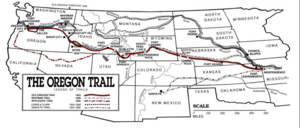
5. Study this map of the Oregon Trail. Record 3 things you notice, 2 questions you have, and 1 thing you learned.

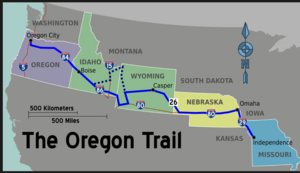
6.  Study this map with modern roads labeled. Find the east and west end of the Oregon Trail. First find Independence, Missouri and then Oregon City, Oregon.  What roads would you choose to take today to get from Independence to Oregon City?

7. Share your Social Studies mini spark recording page and visual with your teacher/EY coordinator.


#1: The First Trick-or-Treaters

Trick-or-treating has been linked to Halloween festivities in the United States and Canada since the early 20th century. However, various cultures around the globe have their own traditions of children visiting homes to collect treats, with one European practice often seen as the origin of the North American custom.

Spark your thinking!

1. Set up your social studies mini spark recording page: #1: The First Trick-or-Treaters

2. Read this article. Write a 3 sentence summary.

Trick-or-treating is a popular Halloween tradition in America, enjoyed by children of all ages. While today it mainly revolves around collecting candy, its roots can be traced back to ancient customs from Ireland and Great Britain. Historically, trick-or-treating is linked to the belief that the souls of the dead would return to Earth on Halloween night.

In the past, people would visit their neighbors and ask for “soul cakes.” These were small baked goods offered by the residents in exchange for a prayer said for the souls of their departed loved ones. This practice was a way to honor the dead and help guide their spirits to the afterlife.

To appease wandering spirits, many families left food and drink outside their homes. This offering was meant to satisfy the spirits, ensuring that they would not cause trouble or play tricks on the living. If a spirit found no offerings, it was believed that they might play a practical joke on the homeowner.

Today, some people still enjoy playing harmless pranks, but the majority of families focus on the fun of giving out treats to children who knock on their doors and say, “Trick or Treat!” This phrase has become a familiar part of Halloween celebrations, signaling the children’s excitement as they collect sweets from neighborhood homes.

3. Trick-or-treating has evolved, but its essence remains tied to the themes of community and remembrance. As you celebrate Halloween, consider the history behind this fun tradition. Learn more about the recipe for soul cakes. Visit this page and look over the into paragraph and the recipe. Write down the ingredients on your recording page.

4. Look over this infographic that shows some of the different traditions involving “treats”. Choose one or two and do some research to find out more details.

5. Share your social studies mini spark recording page with your teacher/EY coordinator.