First, view this video. Then, read about the myths of Thanksgiving – find out what is true and what isn’t!! In the comments section below, tell us what surprised you!
The Mayflower brought the group of English settlers now known as the Pilgrims to North America. Leaving England in the fall of 1620, the Pilgrims were attempting to land near the mouth of the Hudson River, but instead ended up in Cape Cod Harbor. Plymouth, the colony established there by the Pilgrims in 1621, became the first permanent European settlement in New England. The story of the Pilgrims and their harvest feast hassince become one of best-known in American history, but you may not know it as well as you think. Discover the facts behind these well-known Thanksgiving myths!
MYTH: THE FIRST THANKSGIVING WAS IN 1621 AND THE PILGRIMS CELEBRATED IT EVERY YEAR THEREAFTER.
Fact: The first feast wasn’t repeated, so it wasn’t the beginning of a tradition. In fact, the colonists didn’t even call the day Thanksgiving. To them, a thanksgiving was a religious holiday for which they would go to church and thank God for a specific event, such as the winning of a battle. On such a religious day, the types of recreational activities that the Pilgrims and Wampanoag Indians participated in during the 1621 harvest feast–dancing, singing secular songs, playing games–wouldn’t have been allowed. The feast was a secular celebration, so it never would have been considered a thanksgiving in the pilgrims’ minds.
DID YOU KNOW?
The Mayflower was originally supposed to sail with a sister ship, the Speedwell, but it proved unseaworthy, and the Mayflower made the journey alone.
MYTH: THE ORIGINAL THANKSGIVING FEAST TOOK PLACE ON THE FOURTH THURSDAY OF NOVEMBER.
Fact: The original feast in 1621 occurred sometime between September 21 and November 11. Unlike our modern holiday, it was three days long. The event was based on English harvest festivals, which traditionally occurred around the 29th of September. After that first harvest was completed by the Plymouth colonists, Gov. William Bradford proclaimed a day of thanksgiving and prayer, shared by all the colonists and neighboring Indians. In 1623 a day of fasting and prayer during a period of drought was changed to one of thanksgiving because the rain came during the prayers. Gradually the custom prevailed in New England of annually celebrating thanksgiving after the harvest. During the American Revolution, a yearly day of national thanksgiving was suggested by the Continental Congress. In 1817 New York State adopted Thanksgiving Day as an annual custom, and by the middle of the 19th century many other states had done the same. In 1863 President Abraham Lincoln appointed a day of thanksgiving as the last Thursday in November, which he may have correlated with the November 21, 1621, anchoring of the Mayflower at Cape Cod. Since then, each president has issued a Thanksgiving Day proclamation. President Franklin D. Roosevelt set the date for Thanksgiving to the fourth Thursday of November in 1939 (approved by Congress in 1941.)
MYTH: THE PILGRIMS WORE ONLY BLACK AND WHITE CLOTHING. THEY HAD BUCKLES ON THEIR HATS, GARMENTS, AND SHOES.
Fact: Buckles did not come into fashion until later in the seventeenth century and black and white were commonly worn only on Sunday and formal occasions. Women typically dressed in red, earthy green, brown, blue, violet, and gray, while men wore clothing in white, beige, black, earthy green, and brown.
MYTH: THE PILGRIMS BROUGHT FURNITURE WITH THEM ON THE MAYFLOWER.
Fact: The only furniture that the Pilgrims brought on the Mayflower was chests and boxes. They constructed wooden furniture once they settled in Plymouth.
MYTH: THE MAYFLOWER WAS HEADED FOR VIRGINIA, BUT DUE TO A NAVIGATIONAL MISTAKE IT ENDED UP IN CAPE COD MASSACHUSETTS.
Fact: The Pilgrims were in fact planning to settle in Virginia, but not the modern-day state of Virginia. They were part of the Virginia Company, which had the rights to most of the eastern seaboard of the U.S. The Pilgrims had intended to go to the Hudson River region in New York State, which would have been considered “Northern Virginia,” but they landed in Cape Cod instead. Treacherous seas prevented them from venturing further south.
Inventor, Juliette Gordon Low, or as her friends called her, “Daisy,” was like the superhero of Girl Scouts, zooming around with courage, confidence, and character! In 1912, she waved her magic wand and created Girl Scouts of the USA, where girls could gather to unleash their amazing powers in STEAM—science, technology, engineering, arts, and math! Just like a science experiment gone right, she turned her dream of girls teaming up to celebrate their strengths into a fantastic reality!
Spark your thinking!
1. Set up your Social Studies mini spark recording page: #15: Juliette Gordon Low
2. Watch this video to learn about Ms. Low. Take notes on your recording sheet.
3. Read and examine all of the pages on these sheets which share Ms. Low’s patent for a liquid container made out of paper. How do the different labels and figures help understand the drawings.
4. Print page 2 of this information sheet. Work on the folding project. Reminder: You will need to study the patent drawing page to find the steps.
5. Now add your own creativity! Think of 3 new uses for this invention.
6. Take a picture of your product and your three ideas and add it to your recording page
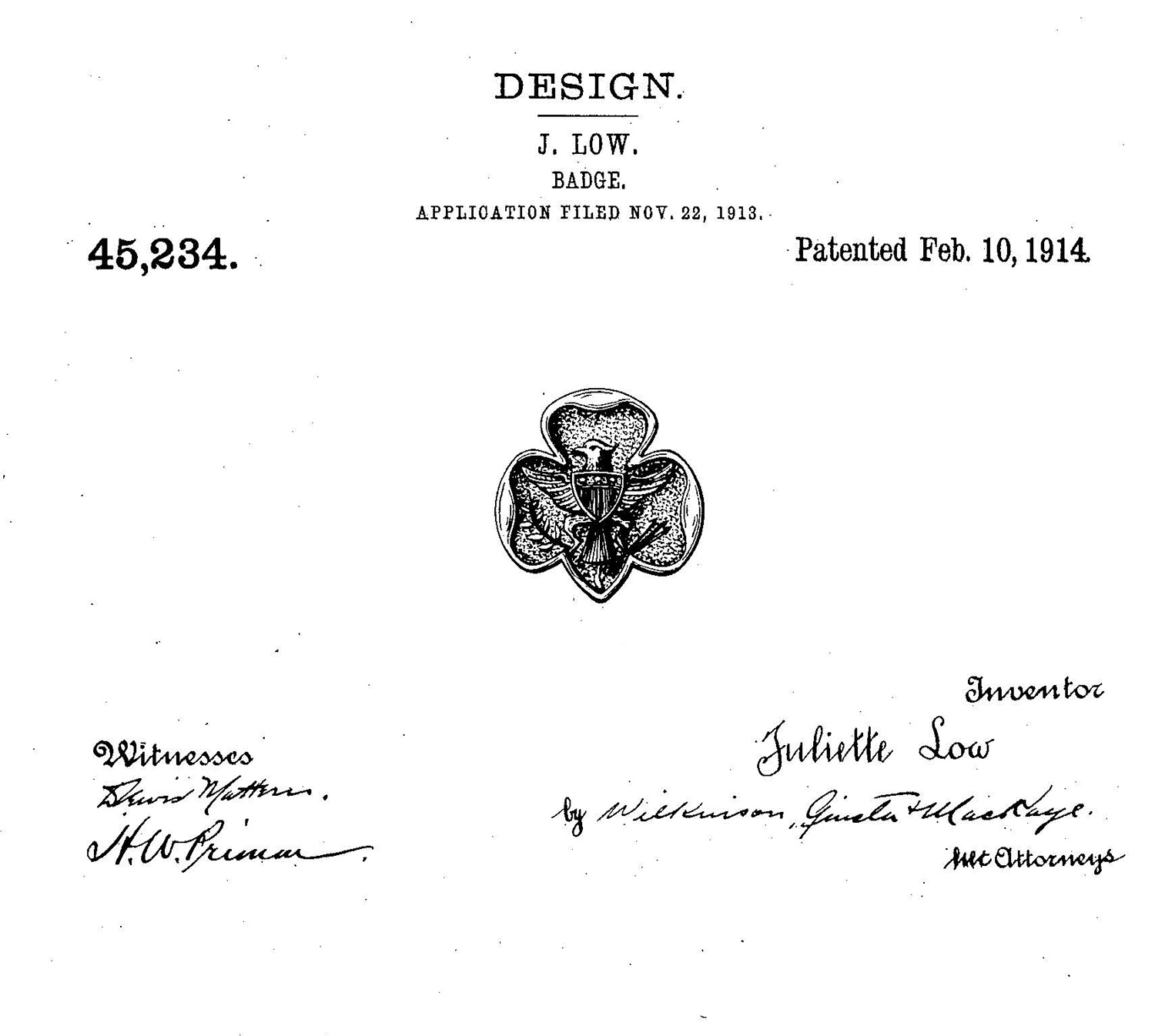
7. Did you know that Juliette Low also has a Design Patent? It may look familiar to you. It is the inspiration for many trademarks utilized by Girl Scouts of America. Study this image. Do some research to find out what a design patent is. Record your findings on your recording page.
8. Share your STEAM mini spark recording page with your teacher/EY coordinator.
Check out the Kids Invent Stuff Badge the Problem Solving Invention Badge at the EY website.
Last year, there was an Early Enrichment post calling students to become a math olympiad. If you haven’t checked out that post, click here!
Here are six new challenges to complete!
1). The three McMath sisters Amy, Betty and Cindy wear different color skirts to school. Their skirt colors are red, blue and yellow. Amy’s skirt is not red and not blue. Betty’s skirt is not blue. What color of skirt does each girl have on?
2). Calculate the following :
999 + 99 + 2 =
998 + 998 + 4 + 9 + 9 =
3) Subtraction: Fill in the blanks:
67 52
– ________ – __________
42 20
95 94
– ________ – __________
24 32
4)Three kids eat 1 apple each at the same time. It took them 3 minutes to eat them. How many minutes does it take for 6 kids to finish eating 6 apples? (Each kid eats 1 apple.)
5) Bob likes to skip stones at the local pond. He collected 15 rocks and separated them into 5 piles. Each pile has a different number of rocks. How many rocks are there in each pile?
Perplexors are logic puzzles that can help improve deduction reasoning skills. They are available in different levels. By using the “cross-out-and-circle” technique, you will practice logical thinking in order to find the correct answer. This math mini spark is brought to you by Hailey K. from Rockbrook.
Spark your math thinking!
1. Set up your math mini spark recording page: #27: Perplexor Puzzles
Explore and learn about some of the most famous works from the National Gallery’s collection, make your own art, and share it with friends!
Spark your thinking!
1. Set up your STEAM mini spark recording page:#22: Paint ‘n’ Play
2. Go to each link below and study the artist’s page. Record the title of the art, the artist’s name, and 2-3 details. Click on “Image Description” for more information about the art.
3. This step has you explore the art website. They recommend playing on a computer or tablet that is rotated to landscape mode. Here you can create your own art. Each of the artists you studied above has a canvas where you can digitally paint, modeling their style, color pallet, and brush technique. Write “I tried out Paint ‘n’ Play!”. Go to Paint ‘n’ Play hosted by the National Gallery of Art in Washington D.C. and spend 5-10 minutes exploring.
4. Explore at least 3 of the artists you studied for few minutes. Click on the rooster on each of the pages and record the quote on your recording page.
5. Chose one artist. Practice creating your own piece in the same style.
6. Take a screenshot of you project and add it to your recording page. Give it a title. Show it to your teacher if you are doing this mini spark on paper.
7. Share your STEAM mini spark recording page with your teacher/EY coordinator.
Build your writing skills by studying adjectives and creating poetry.
Spark your thinking!
1. Set up your language arts mini spark recording page: #24: Adjective Form Poem
2. Listen to this book. When you are done record 5-8 adjectives that describe apples. The list should includes words that describe how the apples look, smell, feel and taste. When you are done with your list, scroll to the bottom of this post for more ideas to add to your list.
4. Read the following poem by Terry Henkelman. Review the words in the poem and notice out how each one is a synonym for the adjective funny. Which of the synonyms is the most unique?
FUNNY…
So amusing
So comical
So humorous
So mirthful
So laughable
Sooo… funny
5. Open this handout. Follow the instructions on the handout for the top section about apples and record your answers on your recording sheet. Use an online thesaurus if needed.
6. Watch this video. Select 2 adjectives from the book and record them on your recording page. Complete the second half of the handout from step 5. Use an online thesaurus if needed.
7. Share your language arts mini spark recording page with your teacher/EY coordinator.
A student recently asked me if I knew the NATO alphabet. I hadn’t heard of it so I told him to send me an email about it and voila…We have our #66 math mini spark!
Spark your math thinking!
Set up your social studies mini spark recording page: #14: Alpha Bravo Charlie
Read about the NATO phonetic alphabet by visiting this site. Record what you have learned.
Learn about how the alphabet was chosen write about some new information that you learned.
Watch this video and then record the spelling of your first name using the correct NATO alphabet words.
5. Check out how the U.S. Navy uses alphabet flags, numeral pennants, numeral flags, and special flags and pennants for visual signaling. Even though the flags are not used for spelling out words, draw the flags that would spell your first name.
6. Share your math mini spark recording page with your teacher/EY coordinator.
CM (Charlie Mike): Means continue mission. Keep moving forward.
Learn to write using more interesting language. Learn to break up the mundane, overused patterns. Create a lipogram to help improve your skills.
Spark your thinking!
1. Set up your language arts mini spark recording page: #23: LIPOGRAM LESSON
2. A lipogram is a piece of writing that leaves out a particular letter or letters, on purpose! The word comes from the Ancient Greek leipográmmatos, which means “leaving out a letter”. While writing a lipogram from scratch is certainly one option, this mini spark will have you rewriting passages/poems that are provided for you. Write the definition of Lippgram on your recording page.
3. Something as simple as Twinkle, Twinkle Little Star can stretch you to create vivid writing if you have to remove ‘E’ or ‘A’ (or ‘E’ AND ‘A’), while retaining the rhyme and line length and rhythm. Watch this video to have this explained further. Write the challenge on your recording sheet.
4. Take this poem and rewrite it on your recording sheet. Choose “E” or “A” to leave out or both “E” and “A” which is more advanced.
Twinkle, twinkle, little star,
How I wonder what you are!
Up above the world so high,
Like a diamond in the sky.
5. When you are done, scroll way to the bottom of this post to see the sample that Mr. Byrdseed wrote.
6. Look over this poem
Mary had a little lamb,
Its fleece was white as snow;
And everywhere that Mary went
The lamb was sure to go.
It followed her to school one day,
Which was against the rule;
It made the children laugh and play
To see a lamb at school.
7. Here’s an incredible lipogram example. It’s “Mary Had A Little Lamb” written by A. Ross Eckler without using B, F, G, J, K, O, Q, U, V, W, X, Y, or Z. Read it several times an on your recording page write about what you noticed, liked, or didn’t like about the rewrite.
Maria had a little sheep,
As pale as rime its hair,
And all the places Maria came
The sheep did tail her there;
In Maria’s class it came at last
(A sheep can’t enter there).
It made the children clap their hands;
A sheep in class, that’s rare!
8. Choose one of these classic poems to rewrite without the letter E. Record it on your recording page.
The Cat and the Fiddle
Hey diddle diddle,
The cat and the fiddle,
The cow jumped over the moon.
The little dog laughed to see such sport,
And the dish ran away with the spoon.
Hickory, dickory, dock
Hickory, dickory, dock,
The mouse ran up the clock.
The clock struck one,
And down he run,
Hickory, dickory, dock.
The Wise Old Owl
There was an old owl who lived in an oak;
The more he heard, the less he spoke.
The less he spoke, the more he heard,
Why aren’t we like that wise old bird?
9. Share your language arts mini spark recording page with your teacher/EY coordinator.
 Let it Snow, Let it Snow, Let it Snow! Explore this math mini spark to learn more about the snowflakes.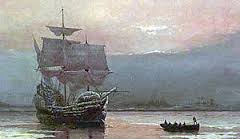




 Perplexors are logic puzzles that can help improve deduction reasoning skills. They are available in different levels. By using the “cross-out-and-circle” technique, you will practice logical thinking in order to find the correct answer. This math mini spark is brought to you by Hailey K. from Rockbrook.


 Say what?
 Learn to write using more interesting language. Learn to break up the mundane, overused patterns. Create a lipogram to help improve your skills.