Category Archives: Learning Opportunities

#13: Geography Lesson-State Capitals

It is always a good time to learn more about Geography. Study this geography lesson which is all about state capitals.

Spark your thinking!

1. Set up your social studies spark recording page: #13: Geography Lesson-State Capitals

2.  Watch this video all of the way through.  Go back to the video to find 5 capital/state combos that you don’t have memorized yet. Record the state name, capital, and the image that was drawn in the video.

3. Print or open this list of states and capitals. Choose 10 that you do not have memorized. Type or write all 10 sets on your recording page.

4. Take the 10 states that you picked and make flash cards using note cards. Set your timer and practice for 3 minutes. On your recording sheet, write how many you know after 3 minutes. For example: After 3 minutes I have 5 out of the 10 state/capital combos memorized.  5/10

5. Take this capital quiz one time. Record your score.

6. Find the list of states and capitals from step 3. Set your timer for 3 minutes and read over the list.  Take this capital quiz again. Record your score.

7. OPTIONAL: Check out this webpage made by a teacher who found the best way to memorize the states’ capitals. Look it over and see what you think.  If you want to try this challenge yourself, take to your teacher about printing a 11X 17 map of the USA so you can make all of the drawings. If want to do this project, you can earn the  state savy badge-state capitals edition.

8. Share your social studies mini spark recording page and visual with your teacher/EY coordinator.

Check out the state savvy badge at the EY website.

#26: Fall Math

I love everything about fall…football, leaves changing colors, pumpkins, candy corn, and costumes!  This math mini spark has a variety of activities to choose from.

Spark your math thinking!

  1. Set up your math mini spark recording page: #26: Fall Math
  2. Print this coordinate plane graphing activity. Take a picture of your final project and add it to your recording page.
  3.  Do a candy corn science experiment. Look over the supplies for the experiment. Ask your teacher or EY coordinator if you need helping getting what you need. Take pictures and record the results for each liquid on your recording page. Prompts to answer are on the experiment page.
  4. Print this Halloween candy probability activity. Take a picture of your final project and add it to your recording page.
  5. Print this pumpkin math activity. For this activity you will need a tiny pumpkin. You can also use an orange or an apple.
  6. Share your math mini spark recording pages/activity sheets  with your teacher/EY coordinator.

#28: Fall into Fall

In this early enrichment mini spark you are going to investigate why leaves change colors and fall to the ground.

Spark your thinking!

  1. Set up your early enrichment mini spark recording page: #28 Fall into Fall
  2. Watch this video about leaves changing colors in the fall. What is your favorite leaf color? Add the color and why it is your favorite to your recording page
  3. Read this teaching page with science terms and information about leaves changing color. Record 5 science words on your recording page.
  4. Share your early enrichment mini spark recording page with your teacher or EY Coordinator.

#25: Sweet Math

This math mini spark has you diving into a box of donuts and solving a variety of math problems.

“Donut” let this opportunity slip by!

Start solving these “sweet” math problems today!

Spark your math thinking!

1. Set up your math mini spark recording page: #25: Sweet Math

2.”You can think of almost anything as a math problem!” Ms. Fibonacci in Math Curse by Jon Scieszka.

3. Print out the PDF or make a copy of the digital version of the doughnut activity page. Due to the complexity of some of the questions, It’s acceptable to use your resources (ie. teacher, older brother or sister, Internet to look up a formula, etc.) and ask for help.

4. Share your math mini spark recording page with your teacher/EY coordinator.

#27: Jeff Kinney

If you like reading, writing, or illustrating stories, you are in the right place!

Spark your thinking!

1. Set up your early enrichment mini spark recording page: #27: Jeff Kinney

2. Watch this interview. On your recording page write another question that you would like to ask Jeff Kinney.

3. Writing a story can be challenging sometimes, but the author of Diary of a Wimpy Kid has some great tips for you to follow.  

  1. Take your time writing. To become an expert, you need lots of practice! 
  2. Find someone to help you out. Ask someone who can edit your work to make it even better!
  3. Be unique. Try something new and make your work stand out. 

Which tip is the most important in your opinion? Write the number for that tip on your recording page.

4. Your turn! Write your own diary entry in the style of the Diary of a Wimpy Kid books. Print this template or make your own on your recording page. 

5. Share your early enrichment mini spark recording page and your diary with your teacher or the EY coordinator in your building.

#21: Inventions

Invention is transforming your wildest daydreams into reality, like a robot making pancakes! It’s about mixing ideas and experiments to create something cool and useful!

Spark your thinking!

1. Set up your language arts mini spark recording page: #21: Inventions

2. Watch this intro video. Summarize a few of the ideas you liked from this video on your recording sheet.

3. Did you know a 15-year-old boy invented earmuffs back 1858?  Write the steps for how this came about on your recording sheet.

4. Watch this video and write a 1 sentence summary for each of the inventors.

5.  These kids all used their hearts and their smarts, and started somewhere!  Watch this video to get some ideas about the process. Take 5 detailed notes on your recording sheet.


6. On your recording page, do some brainstorming about how you could combine two items into one, like the examples from the video. Try to come up with 3 ideas. They do not need to be useful-but perhaps more creative and fun.

7. Share your language arts mini spark recording page with your teacher/EY coordinator.

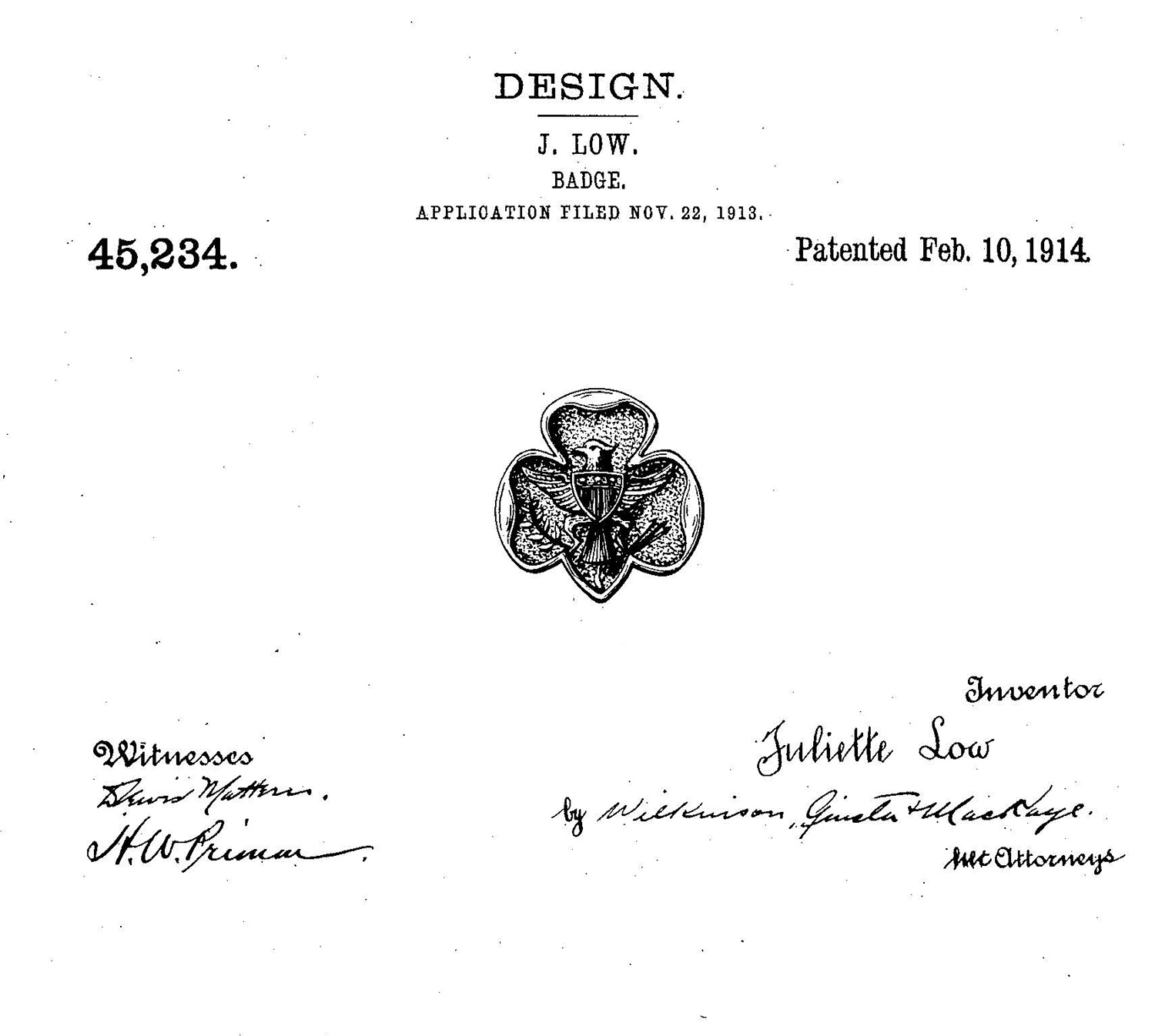
Check out this badge at the EY website

#24: The Bean

Math concepts are fantastically weaved into all kinds of artwork and Cloud Gate, or “The Bean”, in Chicago, IL is no exception!  Cloud Gate is British artist Anish Kapoor’s first public outdoor work in the the United States.

cloudgate

Image Source: https://www.flickr.com/photos/rmlowe/6144649661

Spark your math thinking!

1. Set up your math mini spark recording page: #24: The Bean

2. According to the city of Chicago website, The 110-ton elliptical sculpture is forged of a seamless series of highly polished stainless steel plates, which reflect Chicago’s famous skyline and the clouds above. A 12-foot-high arch provides a “gate” to the concave chamber beneath the sculpture, inviting visitors to touch its mirror-like surface and see their image reflected back from a variety of perspectives. Inspired by liquid mercury, the sculpture is among the largest of its kind in the world, measuring 66-feet long by 33-feet high.  Watch this summary video below and record 5-10 details on your recording page.

3. Watch a video on how they “Clean the Bean”. Record 3 sentences about what you have learned about this process on your recording page.

4. Take a look inside the Bean during construction.  What math and science was involved in creating the bean?

5.  “The Bean” is 33 feet high, 42 feet wide, and 66 feet long. It weighs about 110 tons — roughly the same as 15 adult elephants. Suppose a regular bean was sitting next to Cloud Gate. Do some research to find out the dimensions of a regular bean.  Do some math calculations. About how many times bigger is cloud gate? Record your work on your recording page.

6. Share your math mini spark recording page with your teacher/EY coordinator.

Thanks to the Hoffart boys at Sunset for inspiring this math mini spark!

#20: Open a Book

Have you ever wondered what’s happening in your brain while your are reading to turn all these weird symbols into meaning? Check out this reading mini spark to learn more about this process.

Spark your thinking!

1. Set up your language arts mini spark recording page: #20: Open a Book

2. Reading is something you’re doing effortlessly right now. Ever wondered how your brain turns symbols into meaning? This video will help you rediscover the amazing process of reading.

3. After watching this video, choose 5 of these questions to respond to on your recording page. Each response should be at least 2 sentences. Remind your teacher that the answer key is in the reading mini spark folder.

  1. What secret does Joe mention about how we read?
  2. How do rounded letters differ from flat-topped letters in terms of height?
  3. Explain the “Müller-Lyer illusion” and how it relates to letter recognition.
  4. What is the “paradox of reading” that Dr. Erica Brozovsky discusses?
  5. Describe the concept of “neural recycling” as explained in the video.
  6. How do our eyes gather information when we read, according to the video?
  7. What is the “Word Superiority Effect,” and why is it important in understanding reading?
  8. Discuss the role of the fovea and parafovea in reading. How do they contribute to our ability to recognize words?
  9. How does the brain process the shapes of letters and words according to the video?
  10. What happens in our brains when we recognize a word, as described by Joe in the video?

4. Read this article about benefits reading. List your top 3 on the recording sheet.

5. On your recording sheet write title of the book you’re currently reading and write about your opinion about the book at this time. Support your decision with 3 specific examples and 3 details.

6. Share your language arts mini spark recording page with your teacher/EY coordinator.