Category Archives: Learning Opportunities

#60: Millions, Billions and Trillions

I really thought I knew everything there was to know about a million, billion and trillion until I came across a Numberphile video with new information!  If you’re up for a challenge and making your brain stretch a little, then this math mini spark is for YOU!

Spark your math thinking!

  1. Set up your math mini spark recording page: #60: Millions, Billions and Trillions
  2. How Much is a Million by David M Schwartz is one of many picture books I have on my bookshelf.  It’s a great book to help visualize what a million, billion, and trillion look like.  Listen to this book .
  3. A Million Dots by Andrew Clements is another one of my favorites.  In the book, you will actually see ONE MILLION dots!  Don’t believe me?  You can count them yourself!
  4. Print a copy (or have your teacher print you a copy) of this worksheet. You can also record the sentences and charts on your recording page.
  5. Watch this numberphile video How Big is a Billion?

6. Fill out the sentences starters and the chart after watching the video.

7. Share your math mini spark recording page and your chart with your teacher/EY coordinator.

#34: Dragon Study

Dragons have been an important character in fairy tales and fantasy stories for ages.  Learn about these fantastic creatures in this LA mini spark.

Spark your thinking!

1. Set up your language arts mini spark recording page: #34: Dragon Study

2.  Write each word, its part of speech, and a short definition. 

geomythology                caldera                   mastodon                     geothermal 

 3. Scroll to the bottom of this post to check to see that your definitions are correct. Add any missing information.

4.  Watch this TED ed about the origin of dragon myths. 


5. Read these fact cards about dragons. Create a mini quiz to go along with the content. Make an answer key as well. 

6. Share your language arts mini spark recording page and your final project with your teacher/EY coordinator.
 

You can use parts of this mini spark  as tasks on the Dragon Tales Badge at the EY website.


geomythology  ( noun )
Definition: The study of how myths and legends are related to the geology and geography of a place.
Example: Geomythology looks at how stories about dragons might be connected to real fossils or volcanoes.
caldera  ( noun )
Definition: A large, bowl-shaped depression formed when a volcano erupts and collapses.
Example: The big caldera was formed when the Kilauea volcano caved in.
mastodon  ( noun )
Definition: An extinct, large mammal similar to a mammoth or elephant, with cone-shaped cusps on the molar teeth.
Example: Maybe old storytellers made up Cadmus’ tale after finding these mastodon fossils.
geothermal  ( adjective )
Definition: Relating to the internal heat of the Earth.
Example: Other dragon actions, like breathing fire, may have been connected to geothermal elements like volcanoes and hot springs.


#59: World’s Favorite Cookie

What is your favorite kind of cookie?  These are some of my favorite treats. Check out his math mini spark about the world’s favorite cookie! Yum!

Spark your math thinking!

1. Set up your math mini spark recording page: #59: World’s Favorite Cookie

2. Watch this video about one of America’s favorite cookies.  Jot down some facts as  you watch the video.

3. Complete this quiz after watching.  Record your score on your answer sheet.

4. Celebrate National Oreo day! Read facts about this day and record 3 facts you learned.


Choose #5 or #6 to complete

5. Work on this Bedtime Math activity Oreos. Read the opening information. Do the “big kids math” and “the sky’s the limit” levels on your recording page. The answers are at the bottom of the webpage so don’t scroll all of the way down until you are ready to check your work.

The Truth about Double-Stuf Oreos


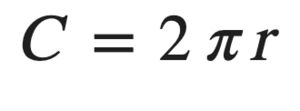
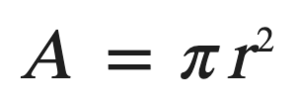
6. Oreo Thins have a diameter of 4.5 centimeters and a thickness of 7.5 millimeters.  Record your answers to the following questions on your recording page.  Use 3.14 for pi.

a. What is the Circumference of an Oreo Thin?

b. What is the Area of an Oreo Thin?

 c. How tall would a stack of 10 Oreo Thins be?

7. Scroll to the bottom of the post and check your answers for number 6 if you picked that one to complete.

8. Share your math mini spark recording page with your teacher/EY coordinator.


a. What is the Circumference of an Oreo Thin? 14.13 cm

b. What is the Area of an Oreo Thin? about 15.9 cm squared

 c. How tall would a stack of 10 Oreo Thins be? 75 cm


#58: Watch a Math Video Everyday

Research has been conducted on the effectiveness of using video in the classroom. Videos are better than the written word when it comes to information retention, education, and overall experience.  Videos have a way of making information “stick” and we are in a day and age were we have access to a plethora of videos that can help us learn.

Spark your math thinking!

  1. Set up your math mini spark recording page: #58: Watch a Math Video Everyday
  2. Print this worksheet.
  3. As you watch a video, jot down new and/or interesting information on your recording page.  What connections can you make?  Which video did you find the most interesting?  Silly?  Entertaining?
  4. Watch at least 3 of the videos to earn this mini spark.
  5. Share your math mini spark recording page with your teacher/EY coordinator.

Check out the Math Video Menu Badge on the EY Badge Page.


#21: The Floating City of Rotterdam

Spark your thinking!

1. Set up your social studies mini spark recording page: #21: The Floating City of Rotterdam

2.  Watch this introduction video. Record each of the places shown on your recording sheet.


3. Read this article and answer 4 of the the questions with 3+ sentences. Remind your teacher that the answer key can be found in the social studies mini spark folder.

  • What historical event led to the creation of the Delta Programme in the Netherlands? Explain the significance of this program in flood management.
  • How does Rotterdam’s innovative architecture contribute to its ability to manage rainwater? Provide specific examples from the text.
  • Explain how the Floating Farm operates. What technologies are used to support food production on the farm?
  • What unique features do Wikkelboats offer to guests, and how do they reflect eco-friendly living?
  • How does the design of the Floating Office Rotterdam (FOR) incorporate sustainability? List at least two design elements mentioned in the text.
  • In what ways do the innovative projects in Rotterdam reflect the city’s response to climate change and flooding challenges?
  • Based on the text, how do these unique architectural projects enhance the experience of residents and visitors in Rotterdam?

4. Go to this link to read an article about the floating park. Write 5-10 details about the park on your recording sheet. Include information about how this park is helping to save the environment.

5. Learn more about floating farms. Record 3-5 reasons you like this idea, 3-5 questions you have, and 3-5 things you don’t like about floating farms.

6. Share your social studies mini spark recording page with your teacher/EY coordinator.


#46: Timeline of Mathematics

In this math mini spark you will explore the accomplishment of mathematicians that have shaped our math world.

Spark your math thinking!

  1. Set up your math mini spark recording page: #46: Timeline of Mathematics 
  2. Go to https://mathigon.org/timeline.  Click on a mathematician and read about their contributions. On your recording page, make a tiny info page for the mathematician with 3-5 details.
  3. Choose several mathematicians from each century and add the info to your recording page.
  4. Share your math mini spark recording page with your teacher/EY coordinator.

#57: Polyhedron

An icosahedron is a polyhedron that has twenty triangular faces.  A stellated icosahedron has each of those faces raised to a triangular pyramid. Wow!  There’s a lot of big words in that sentence!

Spark your math thinking!

  1. Set up your math mini spark recording page: #57: Polyhedron
  2. Find out more about polyhedrons. Take notes on your recording page.
  3. Make a Modular Origami Stellated Icosahedron. You will need 30-35  pieces of 3 X 3 paper or origami paper.
  4.  Watch this video to help you get started.


5. Work on your Modular Origami Stellated Icosahedron. Be patient. It takes practice to make a shape this complex.  Take a picture of your project and add it to your recording page.

6. Respond to this prompt: How is origami related to math?

7. OPTIONAL: Find instructions for math other polyhedron. Here is a site to try. Take a picture of your project and add it to your recording page.

8.  OPTIONAL: Find instructions to make an origami animal using the WWF Together app on your iPad.

9. Share your math mini spark recording page and your  with your teacher/EY coordinator.


#56: Math and Animation

In the videos for this mini spark, Tony DeRose from Pixar talks about 3D animated characters and the math involved to make them look so smooth.  It turns out there is a TON of math behind some of our favorite animated films, and it starts with some of the math learned in middle school!

Spark your math thinking!

  1. Set up your math mini spark recording page: #56: Math and Animation
  2. Watch the videos linked below and share 10 new items you about math and animation that you learned

3.  After watching the videos, click on this link and answer the questions.

4. Share your math mini spark recording page with your teacher/EY coordinator.

Check out the Pixar in a Box Badge from the EY website.

#55: Coordinate Geometry

Coordinate Geometry is one of my favorite areas of math.  There’s just something about getting a sheet of ordered pairs and carefully plotting them on graph paper…connecting the dots to reveal a picture.  If that’s your sort of thing too, check out Option 3 below.  Happy plotting!

Spark your math thinking!

1. Set up your math mini spark recording page:#55: Coordinate Geometry

2. Learn the basics of coordinate geometry by watching this video.  Take picture notes on your recording sheet. 

3. Read about the inventor of coordinate plane geometry, Rene Descartes.

4. This video gives a musical explanation of his accomplishments.  Put together a note page about him.

5. Print out (or have your teacher print out) this project. Plot the ordered pairs on the graph paper and reveal a spooky surprise!  Take a picture of your completed drawing and send it to the EY Coordinator at your building.

6. Create your own coordinate plane art. Plot the points and connect them with the colored lines. Take a picture after you have practiced for at least 10 minutes.

7. Share your math mini spark recording page with your teacher/EY coordinator.

#54: Multiplication Tricks

Multiplication. It is one of the four types of operations you learned in math (along with addition subtraction and division). There are many different ways to multiply numbers. However, sometimes, multiplying really big numbers can be a challenge. Luckily, there are many different techniques you can use to solve large multiplication problems.

Spark your math thinking!

  1. Set up your math mini spark recording page: #54: Multiplication Tricks
  2. Watch this video about multiplying using lines. Take some notes as you watch to track the process.

3. Print out (or have your teacher print out) this worksheet. Use the method in the video to come up with answers to multiplication problems. You can check your answers on the second page of the worksheet.

4. If you feel comfortable with those problems and want to try multiplying bigger numbers, then print out this worksheet.

5. Share your math mini spark recording page and Explain EDU project with your teacher/EY coordinator.

*Lesson inspired by multiplication lessons from East Asian schools