Category Archives: Learning Opportunities

#14: Story Starters

A story starter is one specific type of writing prompt that you can use when you need an idea for a story. In this mini spark, you will find writing starters and comic starters that go along with the Dav Pilkey series: Dog Man, Cat Kid, and Captain Underpants.

Spark your thinking!

1. Set up your language arts mini spark recording page: #14: Story Starters

2. Who is Dav Pilkey? Read a little about him on this page. Record 5 details on your recording page.

3. Watch this video interview. On your recording page, write 2-3 sentences about how Dav started his writing journey.

4. Look over an example of a  writing starter and a comic starter.

Look at the comic starter for Dog Man.

Look at the writing starter for Dog Man.

After looking at each type, would you prefer to write and illustrate comic or write the next part of the story? Add your response to your recording sheet and explain your choice.

5. Choose one of these starters to complete. You can choose to do the comic starter or the writing starter. Print out your choice to use to create your story.  

Comic starter for Dog Man Lord of the Fleas

Writing starter for Dog Man Lord of the Fleas

Comic starter for Dog Man Fetch-22

Writing starter for Dog Man Fetch-22

Comic starter for Cat Kid Comic Club Influencers

Writing starter for Cat Kid Comic Club Influencers

Comic starter for Dog Man

Writing starter for Dog Man

Comic starter for Captain Underpants 25 ½ Anniversary Edition

Writing starter for Captain Underpants 25 ½ Anniversary Edition

6.  Share your language arts mini spark recording page and project if you printed it, with your teacher/EY coordinator.

There are many more choices at the main Story Starters website. If you are interested in doing these projects for a badge, talk to your teacher or your EY coordinator.

#6: Lizard Point Geography Quizzes


How well do you know the location of the stated in the United States of America? In this mini spark you will learn how to use lizard point quizzes to become a geography master!


Spark Your Thinking!

1. Set up your Social Studies mini spark recording page: #6: Lizard Point Geography Quizzes

2. Watch this introduction video. Record 5 of the different ways you can use Lizard Point to help you learn.

3. Decide what your area of study should be. This link will take you to the USA quiz. You can navigate to other geography topics using the toolbar if you would like to choose another area.   Record the name of the content you will study on your recording page.

4. Set your timer for 5 minutes and work on your quizzes. Use the different tools to help you. At the end of the 5 minutes rare your progress on a scale of 1-5.  5 means you mastered the content. If you did a graded quiz you can record that score here.

5. Choose one more area to explore. Set your timer for 5 minutes and work on your quizzes. Use the different tools to help you. At the end of the 5 minutes rare your progress on a scale of 1-5.  5 means you mastered the content. If you did a graded quiz you can record that score here.

6. Share your Social Studies mini spark recording page with your teacher or EY coordinator.


Early Enrichment #13: Writer’s Block

Have you ever heard someone say “writer’s block?” It sounds kind of silly doesn’t it?

Screen Shot 2016-01-22 at 10.10.53 AM

A writer on a block? A writer that uses a block? A writer writing about a block? What is it?

A writer’s block is when you have a hard time of thinking about what to write about or how to keep going in your stories.  Sometimes it is hard to know where to start or where to continue.

Here are a couple of different ways to get over having “writer’s block.”

 1. Listen to music. Music can relax you or inspire you. 

3. Have a snack. Make sure your brain is properly fed when you sit down to write.

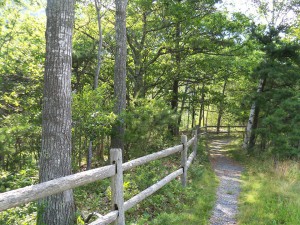
4. Look for inspiration around you. Take a walk, look around, use pictures to inspire you. 

path-82841_960_720


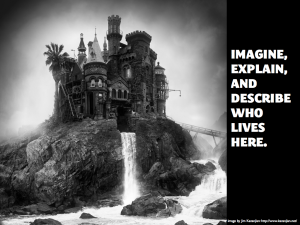
Use this writing prompt and comment below with your story. Try some of these helpful tips if you are facing writer’s block!

tumblr_lzpf9iFYFr1qee12to1_1280

#14: 100

10 squared = 100

The number of centimeters in a meter = 100

The number of sides on a square multiplied by the quantity of the number of letters in the alphabet take away one = 100

55+45 = 100

The base 10 equivalent of this binary number:  1100100 = 100

Spark your math thinking!

1. Set up your math mini spark recording page: #14: 100

2. Choose one of these projects to earn this mini spark.

  • Come up with 100 facts about the number 100. You can include math problems (like the ones listed above)
  • Facts that include the number 100
  • How to say 100 in different languages
  • Learn the scientific names of 100 animals.  Use this site (or another research tool) and present your learning using a tool of your choice (a list on paper, a Keynote, Pic Collage, etc.). Flip a coin 100 times and record the number of heads and tails.  Summarize your results.
  • Write a 100 word story about what you think life will be like 100 years from now.
  • Research information about life 100 years ago.  This article has some information about how things have changed. You may need to do other research Make a NOW VS THEN chart on your recording page. Compare/Contrast this year to what it was like 100 years ago. Include at least 10 items in your chart.

3. Share your math mini spark recording page with your teacher/EY coordinator.

#14: Can we build a wooden skyscraper?

Rising to a height of 85 meters in the Norwegian landscape, Mjøstårnet holds the title of the tallest wooden building in the world, constructed primarily from timber sourced from nearby forests. However, not long ago, towards the close of the 20th century, engineers believed that erecting a wooden structure taller than six stories was unfeasible. What, then, are the differences between wooden constructions like this and skyscrapers made of steel and concrete? Stefan Al explores this question.

Spark your thinking!

1. Set up your STEAM mini spark recording page: #14: Can we build a wooden skyscraper?

2. Listen to how Mjøstårnet is pronounced. Whisper say it 10 times.

3. Watch this TED Ed video. Record 5 terms from the video with the definition on your recording sheet.

4. Choose 5 of these questions to answer on your recording page. **Reminder for your teacher that the answers can be found in the STEAM mini spark folder.

  • Explain how Mjøstårnet blends into the Norwegian countryside.
  • Describe the main types of engineered wood mentioned in the transcript and their functions.
  • What significant invention in the 1890s changed the way wooden buildings could be constructed?
  • How does cross-laminated timber (CLT) differ in construction from traditional lumber?
  • What are some advantages of using CLT and glulam in building construction compared to concrete?
  • Discuss how engineered wood materials like CLT and glulam contribute to environmental sustainability.
  • Why is it mentioned that Mjøstårnet is not made entirely of wood?
  • How do engineered wood materials perform in terms of fire safety compared to steel?
  • What impact could using wooden materials have on the carbon footprint of buildings?

5. Read this post from Guinness World Record. On your recording page, list 5-10 facts about Mjøstårnet.

6. Share your mini spark recording page with your teacher/EY coordinator.

#13: STEAM Challenge: Cardboard Box

Are you ready for a fun cardboard box building challenge? Grab a box, scissors and tape, and a few other item, and let’s get started! With just these three materials, you can create,well, anything you want!

Spark your thinking!

1. Set up your STEAM mini spark recording page: STEAM Challenge: Cardboard Box

2. Look over your STEAM Challenge:

3. Make a sketch of what your project will look like and any ideas that you have. Add a picture of your sketch to your recording page.

4. Gather the materials you will need. Ask an adult to help you find a cardboard box if necessary.

5.  Take a picture of your supplies before you start. Add the picture to your recording sheet.

6. Take a picture of you final project at add it to your recording sheet. Explain your project,  what you did well on this challenge and where you can improve.

7. Share your STEAM mini spark recording page with your teacher/EY coordinator.

Check out the Cardboard Challenge badge at the EY Website.

#5: Geography Lesson: Great Lakes

What’s so great about the great lakes? Complete this Social Studies mini spark and find out!

Spark your thinking!

1. Set up your Social Studies mini spark recording page: #5: Geography Lesson: Great Lakes

2.  Watch this video. Record 10 facts about the lakes.

3.  “Great Lakes Now” takes  you on a field trip to Lake Erie’s coastal wetlands. Record notes on your recording page as you watch the video.


4. Need to memorize the great lakes? Use HOMES to help! Record these letters and the lakes each letter stands for on your recording page. When you are done scroll to the bottom of this post to check your work.

H-

O-

M-

E-

S-

5. Share your social studies mini spark recording page and visual with your teacher/EY coordinator.


Huron

Ontario

Michigan

Erie

Superior

#13: Mad About a Million

One of my favorite pictures books is A Million Dots by Andrew Clements. This book provide readers with several different ways to visualize a million.  This math mini spark asks you to explore this fascinating number!

Spark your math thinking!

1. Set up your math mini spark recording page: #13: Mad About a Million

2. A Million Dots by Andrew Clements is a book that actually has 1,000,000 dots in it (along with many other fascinating facts!).  One million dots my seem kind of hard to imagine, but check out the book and see for yourself.

3. Watch The Making of Hero, a drawing composed entirely out of 3.2 million ink dots. Write your reaction to the final project on your recording page.

4. Do a little experimenting with stippling.  Try the activity shown in this video. Add a picture of your work to your recording page.

5. Figure out a problem involving a million.  Show your work and reasoning for your answer on your recording page.

      • How tall would a stack of one million pennies be?
      • If your leaky faucet dripped one million drops, how much wasted water would that be?
      • How long would it take you to count from 1 to 1,000,000 assuming that you counted one number every second for 8 hours a day?
      • How old would you be if you lived for 1,000,000 minutes?
      • How long will it take for your blink one million times?
      • Come up with your own “million problem”

6. Share your math mini spark recording page with your teacher/EY coordinator.


Early Enrichment #12: Building Strong Shapes

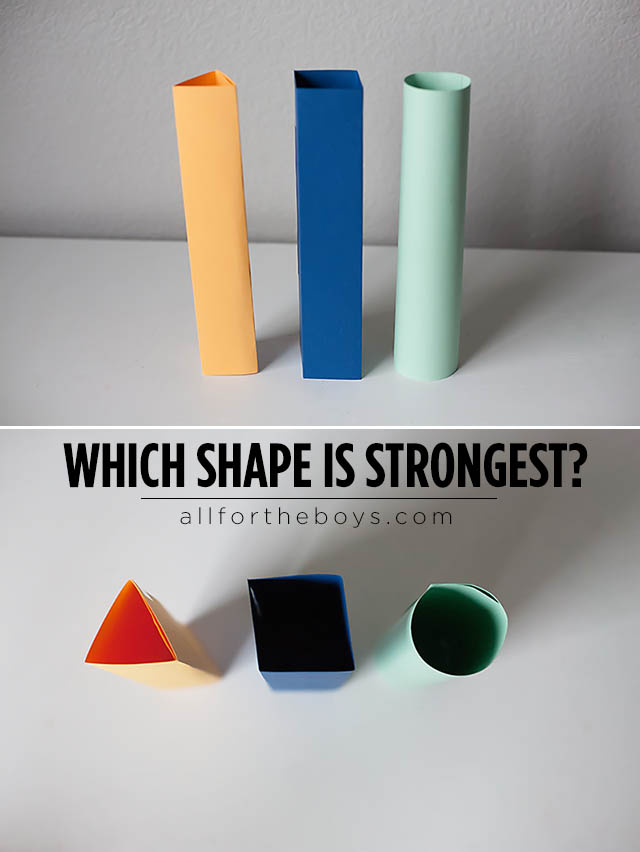
This is an easy, fun experiment to find out how strong different shapes are. Shape 1 sheet of paper into different shapes and see how much they can hold. We made a triangle, square, and cylinder.

AFTBstrongshapes-1

A hypothesis is a special word that scientists use for “an idea that you can test,” it is also a kind of prediction. Make a hypothesis of which shape will hold a book best. Do you think a circle will be stronger than a square?

Test your hypothesis out! Does your shape hold more than one book?

Can you think of other shapes or structures that might be stronger? Share your ideas below!

Activity from  All for the boys 

#12: Inventor Collection

In the STEAM mini spark, learn about inventors. The USPTO collection cards show goofy caricatures of inventors! They’re made to celebrate all kinds of inventors from different backgrounds.

Spark your thinking!

1. Set up your STEAM mini spark recording page: #12: Inventor Collection

2. The USPTO (United States Patent and Trademark Office) has a collectible card series for kids. The cards feature caricatures of various inventors and are designed to recognize a wide variety of patent holders from diverse backgrounds and demographics in an effort to encourage and inspire future generations of inventors and innovators from various walks of life.

3. Go to the USPTO website  and you will find over 20 inventor collection cards.

4. Each person has a information for you to review. Make a record of each of the people with a few facts for each on on your recording sheet.

5.  Create a kahoot or other quiz about the people featured on the cards.

6. Share your STEAM mini spark recording page and your quiz with your teacher/EY coordinator.

Check out the Kids Invent Stuff Badge the Problem Solving Invention Badge at the EY website.

Check out the STEAM mini spark about  inventorJuliette Gordon Low.