Category Archives: Learning Opportunities

#71: Olympic Medals

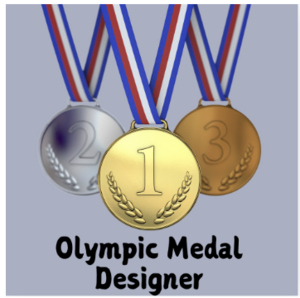
In the 2020 Olympic Games, 80,000 tons of mobile phones and small electronic devices around Japan were used in the crafting of every gold, silver and bronze Olympic and Paralympic medal awarded to athletes.

The 2024 Olympic medals are special because they have a piece of the Eiffel Tower in them. The medals contain 18 grams of iron taken from parts of the Eiffel Tower that were replaced during renovations. Athletes who win in the Paris Olympics and Paralympics will receive these unique medals.

Spark your math thinking!

1. Set up your math mini spark recording page: #71: Olympic Medals

2. Read this article containing 5 facts about the 2024 games in Paris.  Create a note taking page and include any at least 5 interesting details you come across in the article.

3. Dive in deeper to the 2024 medal creation process and learn more about the design at this Olympics 2024 website. Record 5 ideas on your recording page.

4. Read this article about the recycling project from the 2020 Olympics. Record at least 3 number facts on your recording sheet.

5.  Watch this video.  Record specific details about the makeup of the gold, silver and bronze medals, how many were made for the Olympics in Paris, and the value of a medal.


6. Share your math mini spark recording page with your teacher/EY coordinator.

Check out these other mini sparks!
Social Studies Mini Spark #11

Steam Mini Spark #31

#28: Egypt

Egypt, an ancient and fascinating land, is known for its pyramids, the Nile River, and the pharaohs who ruled.

Spark your thinking!

  1. Set up your Social Studies Mini Spark recording page: #28: Egypt
  2. Read this teaching page about Ancient Egypt from National Geographic Kids. Make a tiny info page about the pharaohs on your recording page. 
  3. Read this fact page about Egypt.  Find 5-8 facts that are interesting to you to record on your recording page.
  4. Look over this map of Egypt. On your recording page write the names of 3 of each of the following items: cities, neighboring countries. bodies of water. Record what you notice about where the majority of the cities are located.
  5. Share your Social Studies mini spark recording page with your teacher or EY Coordinator.

#70 Algebra in Pictures

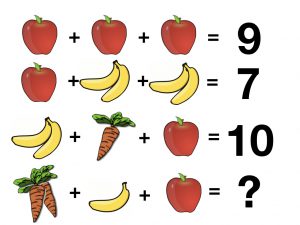
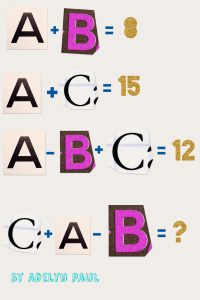
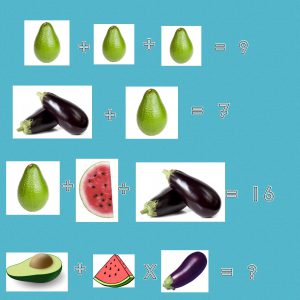
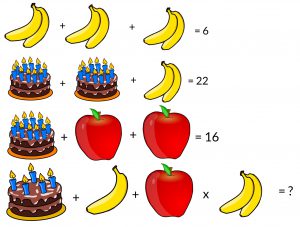
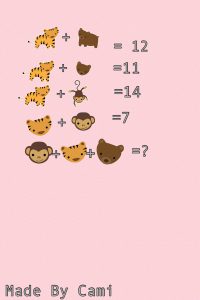
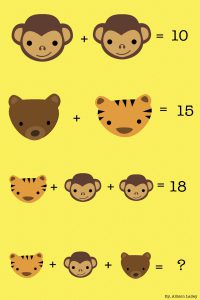
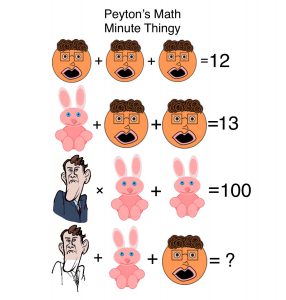
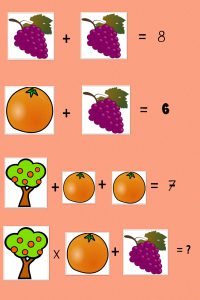
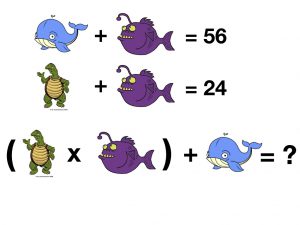
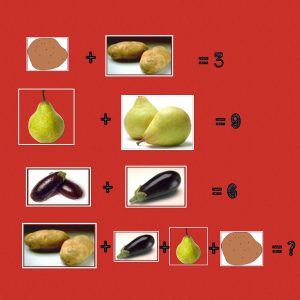
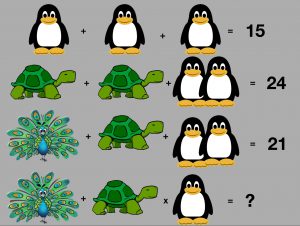
One of the things some students struggle with when taking Algebra is the use of letters (variables) to represent numbers.  However, if we remove the letters and replace them with pictures, somehow Algebra becomes a little more manageable.

Spark your math thinking!

  1. Set up your math mini spark recording page: #70 Algebra in Pictures
  2. Figure the picture puzzle stating what the ? represents in the final “equation”.    Images to create this puzzle taken from pdclipart.org
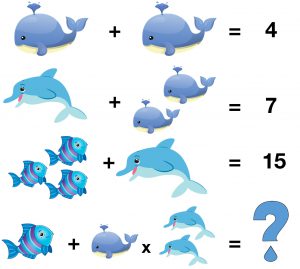
  3. Create your own picture puzzle.  I used Keynote, but you could use Explain Everything, Pic Collage, or another iPad app.  Pictures for your puzzle can be found at https://www.pdclipart.org/ . Please include an answer key.
  4. Solve at least 6 of these 11 puzzles pictured below. Each on

Thank you Mrs. Bridwell for the inspiration to create this post!  Thank you to Mrs. Bridwell’s 6th graders for all the great puzzles below!

5. Share your math mini spark recording page with your teacher/EY coordinator.

Check out one of the solvemoji  badges on the EY badge page.


#69: The Snowiest February

Who knew SNOWIEST was even a word?!

What was the  SNOWIEST February of all time?

Spark your math thinking!

  1. Set up your math mini spark recording page: #69: The Snowiest February
  2.  Use this information page from UNL and find the snowiest February in Lincoln.
  3. Create 1, 2, or 3 different graphs to display the data above from Omaha or data from the UNL site if you prefer.  Use the Create-A-Graph website to make a graph of the data.  Be sure to include a title and label your axes.
    • Top 5 Snowiest Februarys
    • The Top 5 Snowiest Winter Seasons (Dec-Jan-Feb)
    • Top 5 Snowiest Winters (Jul 1- Jun 20).
  4. Take a look at the graphs in the image below.  For a larger image of the graphs, click here.  The information in the blue box is particularly helpful in reading the graphs.  Answer any of the following questions by leaving a comment and/or leave a question for someone else to answer.
    • How many times in January/February 2019 did the temperature range fall mainly in the record highs?  What about the record lows?
    • On how many dates was the temperature range very small (short blue bar)?
    • How many times did the temperature range fall in the average section (green)?
    • What do you find interesting about these graphs?


5. Share your math mini spark recording page with your teacher/EY coordinator.

#27: Presidents’ Day? The Truth Behind the Holiday

In 1879, the United States made Washington’s February 22nd Birthday a federal holiday. Today, the third Monday in February is frequently referred to as “Presidents’ Day.” So which is it? Let’s get to the bottom of what’s official and what’s not.

Spark your thinking!

1. Set up your social studies mini spark recording page: #27: Presidents’ Day? The Truth Behind the Holiday

2. Learn about how the calendar system we use today developed. Watch this video and record 5 details on your recording page.

3. George Washington was born on February 22, 1732… or was he? Discover the complicated story behind George Washington’s birth date and the truth about “Presidents’ Day” holiday. Watch this video. Record 5 details from the video on your recording page.

4. Read this information. Write a very short summary for each paragraph on your recording page.

According to mountvernon.org, George Washington was a humble man who did not enjoy flashy celebrations. During his lifetime, Washington didn’t really celebrate his birthday, choosing instead to use the day to respond to letters or attend to matters at Mount Vernon. However, national celebration of his birthday began while he was alive and continued after his death.

Washington’s birthday is also recognized in another unique fashion. Starting in 1896, it has become a tradition to read Washington’s Farewell Address on February 22nd (the actual day of his birth) in the US Senate by a current member. This tradition reminds us of a man whose patriotic spirit still inspires us to this day, particularly federal workers who uphold what he helped create.

Today the nation typically combines Washington’s Birthday with Presidents’ Day, celebrating both days on the third Monday in February. However, Presidents’ Day is not the official name of the holiday. While the name “Presidents’ Day” was proposed for this Monday holiday in 1951, the U.S. government never officially changed the name. In the 1980s, thanks to advertising campaigns for holiday sales, the term became popularized and largely accepted.

The idea behind the name was to create a holiday that did not recognize a specific president, but rather celebrated the office of the presidency. This joint recognition would also celebrate President Lincoln’s February 12th birthday within the same period. Both great men, both important to our country.

Source: mountvernon.org

5. Share your Social Studies mini spark recording page with your teacher or EY coordinator.

#26: Valentine’s Day History


The Famous Holiday of Love, Valentine’s Day is a holiday celebrated around the world. Some countries celebrate this day in February, but not all.  Learn about the holiday along with history of chocolate in this mini spark.

Spark your thinking!

1. Set up your social studies mini spark recording page: #26: Valentine’s Day

2.  Read about the history of Valentine’s Day at Wonderopolis. Record 3 details about the history of Valentine’s Day on your recording page.

3. A few weeks before February 14th rolls around, what types of commercials do you see more often? If you guessed ones about flowers, rings, and chocolates, you’re exactly right! These are gifts that are commonly given on the holiday that celebrates love: Valentine’s Day. Learn about the history of chocolate and Valentine’s Day.  Record 10 details form the video on your recording sheet.

4. Watch the video  to find out how Valentine’s day is celebrated around the world. Include details about three celebrations from around the world.

5. Share your social studies mini spark recording page with your teacher/EY coordinator.

#39: It’s All About the Heart

For many years, the heart was a mystery.  What did it do?  What was it there for?  Let’s learn all about this muscle.

Spark your thinking!

1. Set up your language arts mini spark recording page: #39: It’s All About the Heart

2. This TED-Ed lesson will help you investigate how the heart keeps you alive. Record 5 details from the video on your recording page.

3. Years ago, people thought emotions came from the heart!  Read this article to find out more about how the heart works. Record 3-5 facts that you did not already know.

4. Choose one of these prompts and respond with 3-5 sentences.

  • What are some ways to keep your heart healthy?
  • What are the four chambers of the heart called, and what does each chamber do?
  • Why was it so difficult for scientists and doctors to figure out what the heart was for?

5. Share your language arts mini spark recording page and visual with your teacher/EY coordinator.


#68:The Math Behind Pringles

This Math Minute was inspired by the Pringles commercial that played during Super Bowl LVII. I’ve always been intrigued by the shape of Pringles, but this commercial took it to the next level and had me pondering the mathematics behind this beloved chip!

Spark your math thinking!

1. Set up your math mini spark recording page: #68 The Math Behind Pringles

2. Watch the commercial.


3. Read this article at Bedtime math

Potato Chips That Rock ‘n Roll

4. List 2 things you learned from the article.

5. Choose 1 project to complete:

  • A Pringles can is a cylinder that is 30 cm tall.  The circles at each end of the can have a radius of 4 cm.  Find the surface area and volume of the can.  Click here for help with the formulas. Record all of your math on paper.
  • Watch this video on stacking Pringles in a complete circle.  Check out Cooper and Jack’s attempt!  Record some ideas about the strategy you would use to make the ring. What problems will you face?  If you want to try this project, talk to the EY coordinator at your school. The #spadyboys had a friendly Pringle Stacking Competition/Taste Test the other night.  Check out the video!
  • Create a package that will hold a single Pringle.  Send it to yourself (or a friend) in the mail and see if your package kept it protected during its journey (didn’t cause it to break).


6. Share your math mini spark recording page with your teacher/EY coordinator.

#67: Rose Bowl Parade

parade | pəˈrād | noun

a public procession, especially one celebrating a special day or event and including marching bands and floats.

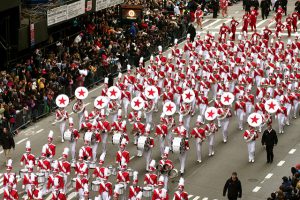
Who doesn’t love a good parade?  People throwing out candy from elaborately decorated floats, listening to marching bands while baton twirlers dance by, watching the line of fancy cars drive by with kings and queens waiving…the list goes on!

A favorite tradition is watching the Rose Bowl Parade on New Year’s Day.  There have been over 135 Rose Bowl parades in Pasadena, California.

Spark your math thinking!

  1. Set up your math mini spark recording page: #67: Rose Bowl Parade.
  2. Watch this video about the design and manufacturing process for floats. Record 3 things you learned and an your idea for a float.


3. Grades 5 and 6 Students: You will calculate the number of flowers used to create the floats. Open this page or print out the sheet. Do problems 1-7 on your recording page.

Ask your EY teacher for the Rose Bowl Parade math page answer key from the Mini Spark folder when you are done.

Grades 3 and 4 Students: Work on the math activity at Bedtime Math.  Read the paragraph at the top of the page. Then do all 4 of the math problems listed. They start very easy and get more difficult. The answers to the math problems are at the bottom of the page, so don’t scroll all of the way down until you are ready to check your work.

4. Share your math mini spark recording page with your teacher/EY coordinator.

image credit: https://www.flickr.com/photos/karmakazesal/4146346672

#38: The Mystery of the Upside-Down Catfish

Learn about the interesting Upside-Down Catfish by completing this reading mini spark.

Spark your thinking!

1. Set up your language arts mini spark recording page: #38:The Mystery of the Upside-Down Catfish

2. Watch video about the upside down catfish. Record a few parts of the script that you thought were interesting.

3. Respond with 3-4 sentences for each prompt.

  • Using many details, explain why an upside-down catfish swims upside-down.
  • How does this fish use camouflage?
  • What part of the video was most interesting to you and why?

4. Share your language arts mini spark recording page with your teacher/EY coordinator.