Category Archives: Learning Opportunities

Early Enrichment #19: Are We There Yet? (E.2)

This week we are traveling to visit one of the largest cities in the world, 

London, England! 
United Kingdom

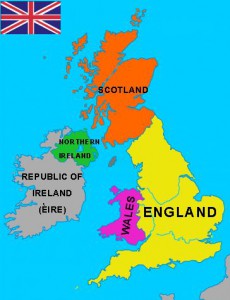
England is a part of Great Britain or the United Kingdom, and makes up the southern half. You can see it below in Yellow. Can you believe London, England is 4,287 mi away from Omaha, Nebraska. To get there you would have to take at least two different planes!

Checkout these activities about London, England: 

  1. Read more about England
  2. Build your own London Bridge  
  3. Learn to draw Big Ben 
  4. Design an English castle and try to include at least 5 different shapes!

Share what you learned below or with your EY Coordinator!


#10: Horse-Riding Librarians

How can you deliver library books to remote parts of the country? In the 1930s, during the Great Depression, jobless Americans in isolated regions of Kentucky relied on horse-riding librarians. Learn more in the Social Studies Mini Spark.

Spark your thinking!

1. Set up your Social Studies mini spark recording page: #10: Horse Riding Librarians

2. A part of President Franklin D. Roosevelt‘s New Deal, the Pack Horse Library Project was “an ambitious plan to deliver educational resources to struggling eastern Kentucky families.” Championed by First Lady Eleanor Roosevelt, the Works Progress Administration (WPA) program also benefited women and children by providing women with a way to earn income.

3.  In this video of Untold History, learn more about the Horse Riding Librarians. Record 5 details about this program on your recording page.

4. Listen to this/read this 6 minute podcast, The Pack Horse Librarians Of Eastern Kentucky, from PBS.

How did people respond to the program?

Where did the books come from?

In the podcast they compared the Kentucky book project to other types of programs around the world. Record a few of these programs.

5. Share your Social Studies mini spark recording page with your teacher or the EY coordinator in your building.


Early Enrichment #18: Pi Day

Pi

Not, Pie, but Pi! Have you ever heard about it?

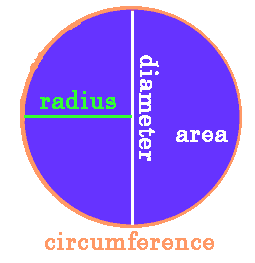
Pi is the 16th letter in the Greek Alphabet, and it is also a math symbol used with circles.

radius

Pi equals the circumference divided by the diameter (π = c/d). The interesting this about pi is that mathematicians who have been working on this number believe that it is infinite, meaning that it’s not the quotient of two integers. In other words, the number pi goes on and on and on, and we don’t know where it ends!

Today, March 14th or 3/14 is celebrated around the world as Pi Day! 

Try out this fun Pi Day Early Enrichment activity below. Watch this video about the never ending number and download the Pi Day Grid Art!


Pi Day Grid Art 

Share your artwork with your EY Coordinator!

** Project adapted from Tinkerlab.com

#19 Exponent Exercises

Stretch your thinking with this math mini spark!

Spark your math thinking!

  1. Set up your math mini spark recording page: #19 Exponent Exercises
  2. Watch this exponent activity at Khan. Take notes on your recording page.
  3. Review exponents at Math is Fun. Make a mini teaching page about exponents,  negative exponents, and what to do it the exponent is 0 or 1 on your recording sheet.
  4. Practice your exponent math by playing Power Play at Transum. Pick the level that fits you. Play the level until you get a trophy. Add a picture of your trophy to your recording page.

5. Share your math mini spark recording page with your teacher/EY coordinator.

#9: The First Filming of an Inauguration

Have you ever wondered when the media first became involved in the Presidential Election process? The first Presidential Inauguration ever filmed was filmed on March 5th, 1933. It was the Inauguration of President Franklin Delano Roosevelt.
Spark your thinking!

1.  Set up your Social Studies mini spark #9: The First Filming of an Inauguration.

2. Click on the link below to watch this first inauguration ever on film:

3. Set your timer for 3 minutes and read part of the this Primary Source: FDR’s First Inaugural Address, 1933.  In this speech, FDR famously said, “The only thing we have to fear is fear itself.” What do you think he meant by this? How can being too scared stop people from solving big problems?

4. The United States Congress traditionally holds an inauguration luncheon in Statuary Hall to honor the president. The food served is often a reflection of the interests or roots of the incoming president. In 1961, Massachusetts-born John F. Kennedy dined on New England boiled stuffed lobster with drawn butter and deviled crabmeat imperial; spending his adult life in California, Ronald Reagan’s menu in 1981 included a California garden salad. If you were elected president of the United States what would be served at your inaugural luncheon reflecting your interests and/or roots?

5. Share your Social Studies mini spark page with your teacher or the EY coordinator in your building.

Learn more about this time period in history with this other Social Study mini sparks.


#16: Biography Study

=

A biography is the story of a real person’s life, whether they are alive today, from centuries past, famous, forgotten heroes, or a unique group of people.


Spark your thinking!

1. Set up your language arts mini spark recording page: #16: Biography Study

2. Check out the this website. It contains biographies of many people. You will find world leaders,inventors, scientists and many more. Click on 3 of the names. What topics do the pages introduce?

3. Choose someone you have not heard of before and read that person’s biography. On your recording page, add the person’s name and 3 of the most interesting facts you learned.

4. Create a mini-quiz (5 questions or less) about your subject and add it to your recording sheet. Include an answer key.

5.  Repeat this process for 5 different people.

6. Share your language arts mini spark recording page with your teacher/EY coordinator.

Check out the Who was Making History Badge or the Who was Badge at the EY website

#17: Science Simulations

Have you ever wondered how an atom is created?  Or maybe you find yourself wondering how energy forms and changes.  Do building fractions and creating creatures from area formulas excite you?  Then this simulation website is for you!

Spark your thinking!

1. Set up your STEAM mini spark recording page: #17: Science Simulations

2. PhET Simulations is an interactive website full of simulations that introduce you to many different areas of math and science such as force and motion, energy forms and changes, the Greenhouse Effect, Glaciers, and more! Watch this tutorial that shows you how to find the different  simulations. On your recording page, describe the static electricity simulation.

3. Click here to get started on your own simulation journey!  The site has the simulations divided into 5 categories. Record the main topics that you can explore on your recording page.

4.  Set your timer for 10 minutes. Explore the site and try out some of the options.

*Be sure to hold your iPad horizontally while working with the simulations.*

5. What was your favorite simulation? Write a paragraph explaining the simulation.

6. Share your STEAM mini spark recording page with your teacher/EY coordinator

#18: Weird But True! Numbers

This math mini spark explores Weird But True!  Number Edition.

Spark your math thinking!

  1. Set up your math mini spark recording page: #18: Weird But True! Numbers
  2. Explore math facts at National Geographic Kids Weird but True! Number Edition.
  3. To move from fact to fact click the arrows
  4. There are 8 facts in total. Record your favorite four facts on your recording sheet.
  5. Do research about each of the four topics so that you can add 3-5 more details for each one.
  6. Share your math mini spark recording page with your teacher/EY coordinator.

#8: The Pony Express

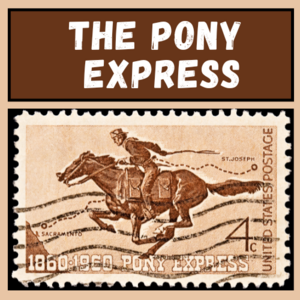
What was the importance of the Pony Express to the settlement and expansion of the American West? Find out in this mini spark.

Spark your thinking!

1. Set up your Social Studies mini spark recording page: #8: The Pony Express

2. Read this article. Record 5 details about the Pony Express.

3. Watch this video. Record 5 details from the video.

4. Share two interesting facts about the Pony Express.

Describe three things about the riders.

Give four reasons why you would want to be a Pony Express rider or four reasons why you would not want to be a Pony Express rider.

5. Share your early enrichment mini spark recording page with your teacher or the EY coordinator in your building.

Check out the Pony Express badge at the EY website.

Early Enrichment #17: Energy and a Roller Coaster

This week, the happiest place on earth, Disneyland, celebrated its 60th birthday!

They planned a huge celebration full of musicians, artists, and sneak peeks

Checkout behind the scenes of Disneyland’s 60th Anniversary Celebration

Can you imagine how much work has gone into making the happiest place on earth? Especially when designing all of fun rides? Like this one:

Roller coasters take a lot of planning, and there are people that have jobs to create new rides. Isn’t that awesome? You could have a job designing roller coasters when you grow up!

Before you can design a roller coaster, you will need to know a little bit more about the different types of energy required. Click here to see how the two types of energy help a roller coaster move. (may require flash, for additional resource: click here).

What two types of energy are there in a roller coaster?

Potential and Kinetic Energy

Try and design your own roller coaster on a piece of paper. If you can, mark down where there will be Potential Energy and Kinetic Energy. Share your designs with your EY Coordinator!