Category Archives: Learning Opportunities

#10: Celebrate Math!

Did you know various math topics have special days solely dedicated to it? Learn about some of these holidays in this math mini spark.

Spark your math thinking!

1. Set up your math mini spark recording page: #10: Celebrate Math! 

2.  What is Pythagorean Theorem Day? To qualify as a Pythagorean Theorem Day, the digits that make up the date must qualify as a pythagorean triple. The next pythagorean triple date will be on July 24, 2025 since 72 + 242 = 252.  Do some research and find some other dates that were or will be Pythagorean Theorem Days. 

3. Mole Day is celebrated on October 23. Read about mole day and take notes about this day on your recording page.  Make sure to define a mole in your notes.

4. The Fibonacci sequence begins like this: 1, 1, 2, 3, 5, 8, 13, 21, 34, 55, 89, 144….      November 23 is celebrated as Fibonacci Day because when the date is written in the mm/dd format (11/23), the digits in the date form a Fibonacci sequence: 1,1,2, 3.         Watch this video about this special number pattern. Add notes to your recording page.

5. Pi Day is on March 14. Watch this short video about this day. Add some interesting details from the video to your recording page. Then, go to this site to find out how long until we celebrate pi day again (to the nearest second). Record this on your recording page.

6. Share your math mini spark recording page with your teacher/EY coordinator.


#10: Benefits of Fire

Why would anyone want to start a forest fire on purpose? In this STEAM mini spark you will find out the answer to this question along with many more ideas about this topic.

Spark your thinking!

1. Set up your STEAM mini spark recording page: #10: Benefits of Fire

2. Find the answers to these questions using the sources below.

  • How can you conduct a controlled burn/prescribed burn?
  • What types of scientists/professionals work in this field?
  • What components of STEAM (Science, Technology, Engineering, Art, and Math) are important to the controlled burn process?

Research Links: While reading/watching each resource, record information that is new to you, is interesting, or sounds important.  

National Geographic article, Controlled Burning.

Firefighter from Florida interview question 1, “How has a place like Florida been shaped by fire?”

Firefighter from Florida interview question 2 “What does it mean to do a prescribed fire or controlled burn?”

Fontenelle Forest Website page, Prescribed Fires

Smokey Bear Website page, Benefits of Fires

National Geographic article, The Ecological Benefits of Fire

3. Record your answers to the 3 questions on your recording sheet.

4. When you are finished researching and answering the 3 questions, display your learning somehow.  Push yourself to try a new app or a new way of showing your learning.  Here are some examples:

  • Write a letter Fontenelle Forest
  • If you could interview a restoration biologist, what questions would you ask?
  • Make an infographic with terms, images, and details about the topic.

5. Share your STEAM mini spark recording page with your teacher/EY coordinator.

Check out the Natural Disaster Reporter badge at the EY website.

#9: Science Experiments

Kids can learn a lot about science by watching and doing fun experiments! When you try out experiments, you get to discover things about chemistry, biology, and physics in a hands-on way. While having fun, you also build important skills like solving problems, doing research, and making decision.

Spark your thinking!

1. Set up your STEAM mini spark recording page: #9: Science Experiments

2.  Check out this rainbow test tubes science experiment. Before you start the video record the title on your recording page. Pause the video after Steve shows you the materials. Decide what will happen and record that on your recording sheet.

3. After watching the video one time through, go back and watch it again. Record all of these items on your recording sheet: title, materials, procedures and results.

2. Look over the other 5 videos in the Science Minute™ Video Collection

3. On your recording page, list the 3 videos that you want to watch.

4. Watch 3 videos. For each video watch it all of the way through one time. Then watch a second time, record the title, materials, procedures and results on your recording page.

5. Choose one of the experiments and display what you learned in a creative way (Pic Collage, Explain Everything, iMovie Trailer, Apple Clips, Canva, your choice).

6. Share your STEAM mini spark recording page with your teacher/EY coordinator.

OPTIONAL: If you wanted to try any of these experiments at home, that is great! Take pictures to share with your EY coordinator. If you need help gathering supplies for an experiment you want to try, talk to your EY coordinator.

#2: The Oregon Trail

The Oregon Trail was a pathway that pioneers took to journey westward to Oregon during the 1800s. This trail was not a railroad; instead, it consisted of a network of worn tracks that extended from Missouri to Oregon.

Spark your thinking!

1. Set up your Social Studies mini spark recording page: #2: The Oregon Trail

2.  Record the names of the landmarks the people saw on the trail.

3. Choose 3 of the questions to answer after watching the video.  Remind your teacher that the key can be found in the Social Studies mini spark folder.

  1. What types of transportation did Pioneers use while traveling on the Oregon Trail? 
  2. Name at least two landmarks mentioned in the video that served as mile markers for the Pioneers.  
  3. Explain why natural wonders were important to the Pioneers on their journey.
  4. How did Pioneers mark their presence at Chimney Rock?
  5. Describe the significance of Chimney Rock to the Pioneers traveling west.  
  6. What does the phrase “if man does not feel like an insect here” suggest about the size of Chimney Rock in relation to the Pioneers?

4.  Choose 3 historic sites to read about that were along the trail.  When you get to the Oregon Trail Webpage, click on the names of the sites to find the information pages. Make a tiny fact page that explains the sites.

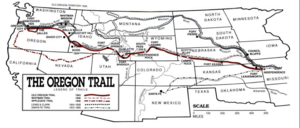
5. Study this map of the Oregon Trail. Record 3 things you notice, 2 questions you have, and 1 thing you learned.

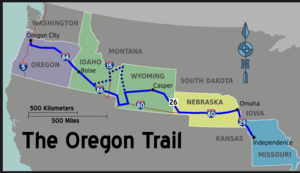
6.  Study this map with modern roads labeled. Find the east and west end of the Oregon Trail. First find Independence, Missouri and then Oregon City, Oregon.  What roads would you choose to take today to get from Independence to Oregon City?

7. Share your Social Studies mini spark recording page and visual with your teacher/EY coordinator.


Early Enrichment #7: Super Digital Citizen

How can you be a Super Digital Citizen?

Try this video on a computer! 

The Cyber Five!

  1. Never give your password to anyone.
  2. Don’t download unless you have permission, you might download a virus.
  3. Don’t respond to a bully online.
  4. Show an adult if someone is bullying you online.
  5. If you don’t like the website you are one, tell an adult and go back.


Can you think of some more rules that will help you be a super digital citizen? See if you can teach your friends how to be a digital citizen by making a poster or pic collage on how you can be safe, respectful and responsible online!

Share your ideas with your EY Coordinator and your class!

#9: Tangram Puzzles

Spark your math thinking!

  1. Set up your math mini spark recording page: #9: Tangram Puzzles
  2. Watch this intro video. Write the tangram rules and puzzle shapes on your recording page.

3. Try out this a tangram puzzle site with challenges to stretch your thinking.

4. Choose 5 or 6 puzzles to solve. Choose the right level for you. Older kids should do the advanced puzzles. Add a picture of each completed puzzle to your recording sheet.


5. Share your math mini spark recording page and your art piece with your teacher/EY coordinator.

Check out the Tangram Badges at the EY website. 

Early Enrichment #6: Alternative Endings


42e8958eb76a1e913dc0805a20ea4528

Have you ever wished a story ended differently in a book?

I know I have!

Maybe it was missing more action, a happy ending, or a hook that makes you want to read more.

Try your hand in being an author, and write an ending for a story. You can use a book that you have read before, or checkout the ideas at this website.

http://www.stuartstories.com/activities/finishme.html

Comment below how you would end the stories!

#11: That’s hard to pronounce!

A heteronyms are words that have the same spelling but different pronunciations and meanings.  For example, wind and wind can easily cause confusion since both word are spelled the same BUT can be pronounced differently and have different meaning. We’ll outline heteronyms and some other words that are hard to pronounce in this mini spark.

Spark your thinking!

1. Set up your language arts mini spark recording page: #11: That’s hard to pronounce!

2. Write this definition on your recording sheet. A heteronym occurs when two or more homographs – words which the same spelling – are pronounced differently. In a written text, this can be confusing.

3. Watch this video. On your recording page record at least 10 ideas you learned from this video.


4. Look at this list of words. Practice the different ways the word can be pronounced.  Ask your teacher to listen to you say the words in the correct format. Have your teacher put her signature on your recording sheet by step 4.

  • Bass – a fish, or a low-pitched instrument
  • Bow – a thing you fire arrows with, or when you bend over in a respectful greeting
  • Desert – to abandon, or a (usually sandy) area with little rain
  • Moped – when you were sad, or a low-powered alternative to a motorbike
  • Perfect – when you get really good at something, or when something is flawless
  • Polish – when you make something metal look great, or something from Poland
  • Wind – when you twist something, or when the air moves

5.  Number your recording sheet from 1-9.  Your challenge is to try to think of a word that will fit into both blanks. These are tricky but spend at least 5 minutes trying to work on these challenge.  GOAL-Try to solve at least 6!  After 5 minutes or when you have at least 6, scroll way to the end of this page to check your work. Put a star for those that were correct and add in correct answers for those that were blank.

    1. She will ———- if you try to bring that ugly ———-into her house.

     2. I saw a ——– in her eye when he threatened to ——– up the agreement.

     3. They were able to ———- the gates before the enemy got too ———-.

     4. The secretary will ——– the items until she has a complete ———-.

     5. A ———- occurred when the prisoners were ordered to line up in a ———-.

     6. It took less than a ———— to identify the ———— virus.

     7. His followers will ———- him if he forces them to live in the arid ——–.

     8. He ——– all that he can to protect the ———- from harm.

     9. The will written by the ———- was declared by a lawyer to be ———-.

6.  Share your language arts mini spark recording page with your teacher/EY coordinator.

Check out mini spark #9 The Dove Dove which is about words and how they are used.

Check out the Rhyme Out badge at the EY website.


ANSWERS

1. Object

2. Tear

3. Close

4. Record

5. Row

6. Minute

7. Desert

8. Does

9. Invalid

Lesson idea from https://www.arkansasonline.com/news/2022/aug/12/super-quiz-heteronyms/

#10: Silly Zoo Stories

Use the ideas from this mini spark and the story starter guide to start your own silly animal themed story.

Spark your thinking!

1. Set up your language arts mini spark recording page: #10: Silly Zoo Stories

2.  Listen to the book, A Couch for Llama. What did you learn about this llama in the story. Write two sentences.

3. Listen to the book, Books Aren’t for Eating.  Write 3 examples of how Leopold is good at his job.

4. You are to write your own silly animal story. Open up or print this super silly story starters page to get some for ideas.  Look it over and decide which of the prompts you will use for this mini spark. Record 3 prompt ideas on your recording page. Put a star next to the prompt you will use for your story.

5. Start thinking about your animal’s personality. Here are some question to answer on your recording page before you start your story.

  • What kind of personality does the animal have? Is it shy or outgoing, even-tempered or grumpy, be specific.
  • What does your animal like to do for fun?
  • Why does the animal choose to live where it lives?
  • What does the animal like to eat and what does the animal NOT like to eat at all???
  • Who are the animal’s best friends. Who is your animal afraid of seeing?

6. Set your timer for 10 minutes and start writing your animal’s story.  Reminder: INCLUDE YOUR ANIMALS PERSONALITY AS YOU WRITE!

7.  Share your language arts mini spark recording page with your teacher/EY coordinator.

OPTIONAL: If you would like to write more animal stories using your ideas from this mini spark, please do! Talk with your EY coordinator or teacher about making these into a badge or check out the Silly Story Starter badge on the EY website

Lesson adapted from https://craftingagreenworld.com/writing/funny-journal-prompts/.